German Citizenship and Residence Visas
Germany has profoundly changed its nationality and immigration rules in recent years.
By descent from a German father or mother, by declaration (§ 5 StAG, until August 2031), by restoration for descendants of those persecuted by the Nazi regime, or by naturalization after five years of residence, with no need to renounce Brazilian nationality.
There is no golden visa in Germany. The main routes are skilled employment (including the EU Blue Card), the Chancenkarte for job seekers, study, vocational training, family reunification and self-employment.
Citizenship: at the Bundesverwaltungsamt (for those living abroad) or at the local naturalization authority (for those living in Germany). Visas: at the German diplomatic missions in Brazil; residence permits: at the Ausländerbehörde (foreigners' authority) of the German city.
Since June 27, 2024, dual citizenship has been generally permitted, and naturalization may be applied for after five years of residence. The three-year fast track, created by the same reform, was repealed on October 30, 2025. On the immigration side, the Skilled Immigration Act (Fachkräfteeinwanderungsgesetz) created new routes between 2023 and 2024, such as the Chancenkarte. On this page, updated in September 2026, we set out the rules in force, with the official sources, and explain how the Sene & Araújo team, with offices in São Paulo and Albufeira, supports Brazilians who wish to obtain German citizenship or live in Germany.
Living in Germany
- Capital
- Berlin
- Population
- 83.3 million inhabitants (Destatis, June 2026)
- Language and currency
- German · Euro (€)
- Time zone
- +4 h from Brasília (+5 h during European summer time)
- Brazilian community
- About 170,000 Brazilians (Itamaraty, 2023)
- Political system
- Federal parliamentary republic, with 16 states · European Union and Schengen
The country at a glance
Germany is a federal republic made up of 16 states (Länder), each with its own powers, especially in education and administration; as a result, practical rules may vary from one state to another. The territory stretches from the northern plains along the North Sea and the Baltic Sea to the Alps in the south. The climate is temperate, with four distinct seasons and cold winters with short days.
Cost of living
Prices are in euros, and the cost of living varies widely from city to city. In large cities, housing tends to be the heaviest item in the budget; mid-sized cities tend to be more affordable. As an official reference, Destatis (Federal Statistical Office) estimated, in provisional data released on September 30, 2026, inflation of 3.3% in September compared with the same month of 2025. Since January 1, 2026, the statutory minimum wage has been €13.90 per hour.
Health care
Everyone residing in Germany must have health insurance. The insurance obligation applies to both the public and the private system. Most of the population is covered by statutory health insurance (gesetzliche Krankenversicherung — GKV), with contributions proportional to income: according to the Federal Ministry of Health, the general rate is 14.6%, plus an additional contribution set by each health insurance fund (an average of 2.9% in 2026), split between employer and employee in the case of employees. Private health insurance (private Krankenversicherung — PKV) is available to, among others, self-employed people, civil servants and employees earning above the compulsory insurance threshold, set at €77,400 a year in 2026.
Education
- Daycare (Kita): under federal law (§ 24 SGB VIII), every child aged 1 or older is entitled to a place in daycare or with a childminder, and from age 3 until starting school, to a place in an early childhood education facility. In practice, availability varies by city.
- School: schooling is compulsory and public schools are free. Each state is responsible for organizing its education system.
- University: according to the DAAD, public institutions generally do not charge tuition for bachelor's programs and most master's programs; students pay only a semester contribution for student services. There are exceptions: Baden-Württemberg charges €1,500 per semester to students who come from outside the EU to study, and in Bavaria some institutions may charge international students.
Work and the economy
Germany is the largest economy in the European Union, with a strong industrial base (automotive, mechanical engineering, chemicals and pharmaceuticals, electrical equipment) and a broad service sector that includes finance, information technology and health care. The country faces labor shortages in several areas, such as nursing and care work, skilled trades and IT. The official portal Make it in Germany provides information on in-demand occupations. According to the Federal Employment Agency (Bundesagentur für Arbeit), in September 2026 the unemployment rate was 6.4%, with 2.994 million registered unemployed and 660,000 vacancies reported to the agency.
Brazilian community
According to the Comunidades Brasileiras no Exterior report by Itamaraty (Brazil's Ministry of Foreign Affairs) (July 2024 edition, base year 2023), about 170,400 Brazilians were living in Germany. The Central Register of Foreign Nationals (Ausländerzentralregister), published by Destatis, on the other hand, counted 58,890 people with Brazilian nationality as of December 31, 2025. Part of the difference stems from methodology: the German register does not include, for example, Brazilians who also hold German nationality or that of another EU country.
Language and integration
German is the language of daily life, public administration and most jobs. English is common in international companies and in the tech sector, but German carries weight in integration, in the job market and in applications for permanent residence and naturalization. The government offers the integration course (Integrationskurs), coordinated by the Federal Office for Migration and Refugees (BAMF): in the general format, it consists of 600 teaching units of German, with a final B1-level exam (Deutsch-Test für Zuwanderer), and 100 units of an orientation course on the legal system, history and culture, with the “Leben in Deutschland” test.
Cities
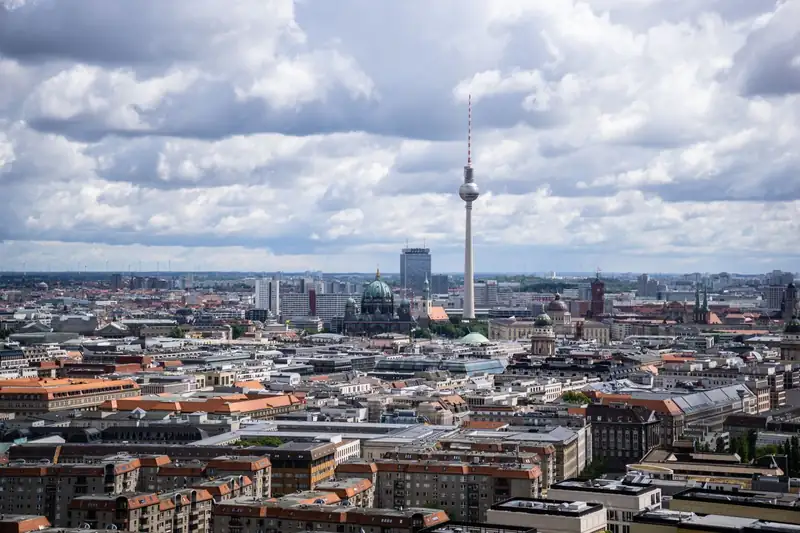

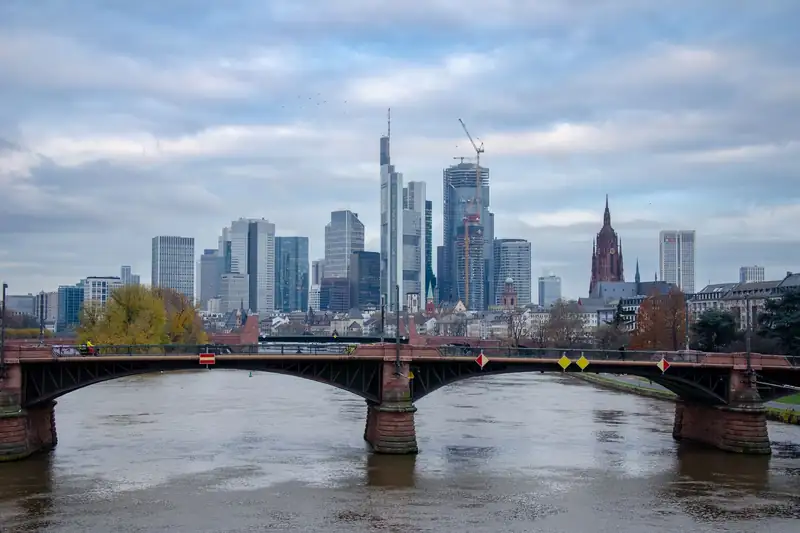
Legal framework and recent changes
German nationality is governed by the Nationality Act (Staatsangehörigkeitsgesetz — StAG) and by Article 116 of the Basic Law (Grundgesetz). The entry and residence of foreign nationals are governed by the Residence Act (Aufenthaltsgesetz — AufenthG), the Residence Ordinance (Aufenthaltsverordnung — AufenthV) and the Employment Ordinance (Beschäftigungsverordnung — BeschV).
What has changed
- Act to Modernize Nationality Law (Gesetz zur Modernisierung des Staatsangehörigkeitsrechts), in force since June 27, 2024: generally permitted dual (or multiple) citizenship, reduced the residence period for naturalization from eight to five years, and created a three-year route for cases of exceptional integration.
- Act amending the StAG (BGBl. 2025 I Nr. 256), in force since October 30, 2025: repealed naturalization after three years (former § 10(3) StAG, which required C1-level German and exceptional integration). Today, the minimum residence period is five years for everyone.
- Fachkräfteeinwanderungsgesetz (Skilled Immigration Act): came into force in stages. On November 18, 2023, the new rules for skilled workers and for the EU Blue Card (Blaue Karte EU) took effect. On March 1, 2024, most of the remaining rules followed, such as the route based on professional experience and the recognition partnership. On June 1, 2024, the Chancenkarte (opportunity card) followed.
The consolidated version of the StAG was last amended in July 2026 (act on abusive acknowledgment of paternity, BGBl. 2026 I Nr. 221), with no change to the naturalization periods and requirements described on this page.
German citizenship by descent (Abstammung)
The basic rule is in § 4(1) StAG: a child acquires German nationality at birth when the father or mother is German, regardless of the place of birth. For earlier births, the applicable law depends on the date: according to the German diplomatic missions in Brazil, until 1974 transmission generally occurred only through the father (in the case of children of married parents), and from 1975 onward also through the mother. When only the father is German and the parents are not married, an acknowledgment or determination of paternity valid under German law is required, made before the child turns 23.
Generational cut-off for births abroad
§ 4(4) StAG limits transmission outside Germany. A child born abroad does not automatically acquire German nationality if the German father or mother was also born abroad after December 31, 1999 and resides outside Germany, unless the child would otherwise be stateless. Nationality is acquired if, within one year of the birth, an application is made to register the birth in the German civil register (§ 36 of the Civil Status Act — Personenstandsgesetz). The application may be submitted to the competent German mission within that period (German consulate and embassy in Brazil). In practice, this now mainly affects grandchildren of Germans born in Brazil from 2000 onward.
How to prove citizenship
Anyone who is already German by descent does not need to naturalize: it is enough to prove the chain of transmission. This can be done through a passport application at the German mission or through the nationality determination procedure (Feststellung) at the Bundesverwaltungsamt (BVA, Federal Office of Administration), which issues the certificate of nationality (Staatsangehörigkeitsausweis). The statutory fee for a determination upon application is €51 (§ 38 StAG). Brazilian and German certificates covering several generations are commonly needed, with names and dates consistent with one another.
Acquisition by declaration (§ 5 StAG)
§ 5 StAG allows persons born after May 23, 1949 who were excluded by former gender-discriminatory rules to acquire citizenship by simple declaration. This applies, for example, to children of a German mother and a foreign father born before 1975, to children of a mother who lost her nationality by marrying a foreign national before the birth, and to the descendants of these persons. The declaration is made to the BVA, is free of charge (§ 38(3) StAG) and may only be exercised within ten years of its entry into force on August 20, 2021, that is, until August 2031 (BVA — Erklärungserwerb).
Restoration for descendants of those persecuted by the Nazi regime
There are two routes of redress, both applied for at the Bundesverwaltungsamt when the applicant lives outside Germany (BVA — Einbürgerung):
- Article 116(2) of the Basic Law: former German citizens who, between January 30, 1933 and May 8, 1945, were deprived of their nationality on political, racial or religious grounds, and their descendants, are entitled to be renaturalized upon application.
- § 15 StAG: covers situations that Article 116 did not, such as persons who, because of persecution during that period, renounced or lost their nationality before February 26, 1955, were excluded from acquiring nationality, were refused naturalization or had to give up their habitual residence in Germany. Their descendants are also entitled to naturalization.
Both routes are free of charge (§ 38(3) StAG). The generational cut-off of § 4(4) does not apply to these cases. Convictions for intentional criminal offenses with a sentence of two years or more may bar the application. For Jewish families and families from other persecuted groups who immigrated to Brazil, the search for archival documents, both German and Brazilian, is often the most time-consuming part of the process.
Naturalization after residence in Germany
Under § 10 StAG, a foreign national with five years of habitual and lawful residence in Germany is entitled to naturalization upon application, provided that the applicant:
- has had their identity and nationality clarified;
- declares allegiance to the free democratic basic order of the Basic Law and acknowledges Germany's special historical responsibility for the Nazi regime and its consequences, in particular the protection of Jewish life;
- holds an unlimited right of residence, an EU Blue Card or another residence permit not excluded by law (permits for study, for job seeking and the Chancenkarte, for example, do not qualify for this purpose);
- is able to support themselves and their dependent family members without social benefits under Book II or Book XII of the German Social Code, subject to statutory exceptions;
- has no relevant criminal convictions;
- has knowledge of German at level B1 of the Common European Framework of Reference;
- demonstrates knowledge of the German legal and social order, as a rule through the naturalization test (Einbürgerungstest).
According to the BAMF (Federal Office for Migration and Refugees), the test has 33 questions, candidates pass by answering at least 17 correctly, and taking it costs €25. Holders of a German school-leaving certificate are exempt. The spouse or registered partner and minor children may be naturalized together with the applicant, even without five years of residence (§ 10(2)). The naturalization fee is €255 per person and €51 for a minor child naturalized together with the parents (§ 38 StAG).
Dual citizenship
Since June 27, 2024, the StAG no longer requires renunciation of the previous nationality, and a German who acquires another nationality no longer loses German nationality (former §§ 12 and 25 were repealed). On the Brazilian side, Constitutional Amendment 131/2023 (Emenda Constitucional) established that Brazilians lose their nationality only if they expressly request it. Thus, as a rule, a Brazilian who naturalizes as a German keeps both nationalities.
Entry and stay of Brazilians
Brazilians do not need a visa for short stays in the Schengen area of up to 90 days in any 180-day period. This exemption does not allow them to work or to take up residence.
For longer stays, § 41 of the Residence Ordinance (AufenthV) gives Brazilians a specific rule: those who do not intend to engage in gainful employment may enter without a visa and apply for the residence permit once in Germany, at the Ausländerbehörde of their place of residence, within 90 days of entry. This applies, for example, to studies, language courses, family reunification or marriage (National visas — German diplomatic missions in Brazil).
Those who intend to work in Germany, on the other hand, must as a rule apply for a national visa (type D) at the competent German mission in Brazil before traveling. Even when visa-free entry is permitted, it is worth assessing whether obtaining a visa in advance is safer in the specific case, for example when the 90-day period is too short to obtain an appointment at the Ausländerbehörde.
Skilled employment, EU Blue Card and recognition of qualifications
Skilled workers (Fachkräfte)
Professionals with vocational training recognized as equivalent to German training, or with a recognized or comparable higher-education degree, may obtain a residence permit to work in skilled employment (§§ 18a and 18b AufenthG). A concrete job offer and, as a rule, the approval of the Federal Employment Agency (Bundesagentur für Arbeit) are required. On first issuance to applicants over 45, the salary must be at least 55% of the annual contribution ceiling of the German statutory pension insurance, unless adequate retirement provision is demonstrated (§ 18 AufenthG).
EU Blue Card (Blaue Karte EU)
§ 18g AufenthG provides for the Blue Card for holders of a higher-education degree with a matching job offer of at least six months. According to the Federal Employment Agency, the minimum gross annual salaries in 2026 are:
- €50,700 in the general case (50% of the contribution ceiling), without approval from the Federal Employment Agency;
- €45,934.20 (45.3% of the ceiling) for shortage occupations (certain groups of the ISCO-08 classification: certain management positions, science and engineering, medicine, nursing and other health professions, teaching and IT) and for recent graduates of no more than three years, with approval from the Federal Employment Agency.
IT professionals without a degree may obtain the Blue Card with at least three years of experience within the last seven years, at the same reduced threshold. The amounts change every year. A Blue Card holder may obtain permanent residence (Niederlassungserlaubnis) after 27 months of employment with basic German (A1), or after 21 months with B1 German (§ 18c AufenthG).
Route based on professional experience
Since March 2024, § 6 BeschV has allowed people to work without prior recognition in Germany if they have vocational training of at least two years or a higher-education degree recognized by the state where it was obtained, at least two years of experience within the last five years, and a salary of at least 45% of the contribution ceiling or an employer bound by a collective bargaining agreement.
Recognition of qualifications (Anerkennung)
For many Brazilians, recognition of their degree or training is the starting point. In regulated professions (medicine, nursing, law, teaching and others), it is mandatory in order to practice the profession. In non-regulated professions, it can open the door to the skilled worker visa. The application may be filed from abroad with the competent authority, which depends on the profession and the federal state. The process usually takes three to four months after the complete documentation has been submitted. The outcome may be full recognition, partial recognition or a decision requiring compensation measures (Anerkennung in Deutschland). Higher-education degrees in non-regulated fields undergo a separate evaluation (Zeugnisbewertung). If compensation measures are required, § 16d AufenthG provides for residence permits to complete them in Germany, including working for an employer during the recognition process (recognition partnership).
Chancenkarte, study and vocational training
Chancenkarte (opportunity card)
In force since June 1, 2024, the Chancenkarte is a residence permit to look for employment or recognition measures in Germany (§ 20a AufenthG). It is available to those who are already skilled workers with full recognition or who reach at least 6 points. In the latter case, the applicant must also have vocational training of at least two years or a higher-education degree recognized by the Brazilian state (with confirmation by a German body), A1 German or B2 English, and means of subsistence. Points are awarded as follows (§ 20b and Annex to the AufenthG):
- partial recognition, with compensation measures pending: 4 points;
- German B2: 3 points; B1: 2 points; A2: 1 point; English C1: 1 point;
- five years of experience in the field within the last seven: 3 points; or two years within the last five: 2 points;
- shortage occupation: 1 point;
- up to age 35: 2 points; ages 35 to 40: 1 point;
- lawful stay of at least six months in Germany within the last five years: 1 point;
- spouse or partner who also meets the requirements and applies for the Chancenkarte jointly: 1 point.
The Chancenkarte is valid for up to one year and allows the holder to work up to 20 hours per week and to complete trial periods of up to two weeks. If the holder finds skilled employment that does not qualify for another permit, it may be extended for up to two years (Folge-Chancenkarte).
Study
A student admitted to a full-time higher-education program is entitled to a residence permit (§ 16b AufenthG), which covers preparatory courses and the Studienkolleg. According to the German diplomatic missions in Brazil, applicants must show means of at least €992 per month, or €11,904 per year, usually in a blocked account (Sperrkonto) opened before the visa application. For preparatory courses, the amount is €1,091 per month (€13,092 per year). Adequate health insurance is also required and, when not verified upon admission, knowledge of the language of instruction at level B2. After completing a higher-education program in Germany, the graduate may receive a permit of up to 18 months to look for employment (§ 20 AufenthG).
Vocational training and applying for studies
There are permits for in-company or school-based vocational training (§ 16a AufenthG), for seeking a training place (up to age 35, with B1 German and a school-leaving certificate granting access to higher education, for up to nine months) and for applying for a place of study, also for up to nine months (§ 17 AufenthG).
Family reunification, self-employment and the absence of a golden visa
Family reunification
The spouse of a foreign national residing in Germany is entitled to a residence permit when both are at least 18 years old, the resident holds one of the permits provided for by law and the spouse is able to communicate in German at a basic level (A1) (§ 30 AufenthG). The A1 requirement does not apply, among other cases, when the resident holds an EU Blue Card, a skilled worker permit (§§ 18a and 18b), a researcher permit or a self-employment permit (§ 21), or when the spouse has an illness or disability that prevents them from demonstrating language skills. As a rule, the same age and language requirements apply to the foreign spouse of a German citizen living in Germany (§ 28 AufenthG).
Self-employment and liberal professions
§ 21 AufenthG allows a self-employment permit when there is an economic interest or a regional need, the activity is expected to have a positive effect on the economy, and financing is secured by equity or a loan. The authorities take into account the viability of the business plan, entrepreneurial experience, the capital invested and the effects on employment and innovation. Applicants over 45 must demonstrate adequate retirement provision. The permit is valid for up to three years and may lead to permanent residence if the business is successful. For liberal professions (Freiberufler), the law is more flexible, but it requires a professional license where the profession calls for one.
There is no golden visa in Germany
German law does not provide for a residence permit granted solely in exchange for a financial or real estate investment. § 21 sets no minimum investment amount: what is assessed is genuine business activity. Those seeking residence by investment in Europe may consider other jurisdictions, such as the Golden Visa in Portugal.
Brazilian documents and first steps in Germany
- Certificates and apostille: Brazil and Germany are parties to the Hague Apostille Convention. According to the German diplomatic missions in Brazil, Brazilian certificates and diplomas must be submitted with an apostille. In citizenship-by-descent cases, it is common to gather birth, marriage and death certificates from several generations, which often require document searches and, where names or dates are inconsistent, correction of civil records.
- Translations: documents in Portuguese usually have to be accompanied by a German translation. Each authority determines which translations it accepts (a sworn translator in Brazil or a certified translator in Germany), so it is advisable to check before ordering one.
- Address registration (Anmeldung): anyone moving into a residence in Germany must register with the local registration authority (Meldebehörde) within two weeks (§ 17 of the Federal Registration Act — Bundesmeldegesetz). Proof of registration is requested in many subsequent procedures.
- Health insurance: everyone residing in Germany is required to have health insurance (§ 193(3) of the Insurance Contract Act — VVG), and adequate coverage is required for visa and residence applications.
- Powers of attorney: when the client cannot be present in Brazil, several steps can be carried out through a power of attorney.
If your plans also include Portugal, we handle the recognition of degrees in Portugal.
How Sene & Araújo can help
Sene & Araújo is a law firm with offices in São Paulo and Albufeira and lawyers admitted to the Brazilian Bar Association (OAB) and the Portuguese Bar Association (Ordem dos Advogados). We do not have lawyers admitted in Germany. We act as advisors and as the point of contact for Brazilian clients, working with local professionals when the procedure so requires. The work is organized in two stages:
- Preliminary case review and feasibility opinion: in an initial consultation, we examine the family history or professional profile, the available documents and the client's goals, and identify the possible routes, the risks and the documents required.
- Assistance with the procedures: based on the opinion, we support the client throughout the chosen procedures.
Our services include:
- Citizenship and immigration consulting: guidance on the appropriate route, whether by descent, declaration, restoration, naturalization or residence.
- Assistance with German citizenship: assembling the chain of documents, preparing the forms and organizing the application for the Bundesverwaltungsamt or the German mission.
- Assistance with visas and residence: organizing the documentation for the national visa and the residence permit.
- Consular procedures: support with appointments and applications at the German diplomatic missions in Brazil.
- Follow-up of procedures in Germany: monitoring procedures before the German authorities, working with local professionals when necessary.
- Recognition of qualifications: preparing, on the Brazilian side, the documents for the Anerkennung process (academic transcripts, course syllabi, certificates of completion and proof of experience).
- Search for certificates in Brazil and Germany: locating and obtaining certificates, apostilles, coordinating sworn translations and correcting civil records in Brazil.
Decisions rest with the German authorities, and each case depends on a review of the documents. For an initial review, contact our team.
Legal basis and official sources
- Staatsangehörigkeitsgesetz (StAG) — consolidated version, last amended by Art. 3 of the Act of July 21, 2026 (BGBl. 2026 I Nr. 221)
- StAG, § 4 (acquisition by birth; generational cut-off)
- StAG, § 5 (acquisition by declaration)
- StAG, § 10 (naturalization)
- StAG, § 15 (restitution naturalization)
- StAG, § 38 (fees)
- Grundgesetz, Art. 116
- Gesetz zur Änderung des Staatsangehörigkeitsgesetzes sowie weiterer Vorschriften (BGBl. 2025 I Nr. 256) — repeal of naturalization after three years
- Aufenthaltsgesetz (AufenthG) — consolidated version
- AufenthG, § 18 and § 18c (general requirements; permanent residence for skilled workers)
- AufenthG, § 18g (EU Blue Card)
- AufenthG, §§ 20a and 20b and Annex (Chancenkarte and points table)
- AufenthG, § 16d (recognition of qualifications)
- AufenthG, § 16b (study)
- AufenthG, § 21 (self-employment)
- AufenthG, § 30 (spousal reunification)
- Aufenthaltsverordnung (AufenthV), § 41 (visa-free entry of Brazilians for long stays)
- Beschäftigungsverordnung (BeschV), § 6 (employment based on professional experience)
- Bundesmeldegesetz, § 17 (address registration)
- Versicherungsvertragsgesetz (VVG), § 193 (mandatory health insurance)
- BAMF — Einbürgerung (naturalization and naturalization test)
- Bundesverwaltungsamt — Einbürgerung / Erklärungserwerb / Wiedergutmachung
- Bundesverwaltungsamt — Erklärungserwerb nach § 5 StAG
- Bundesverwaltungsamt — Wiedergutmachungseinbürgerung nach § 15 StAG
- Bundesverwaltungsamt — Feststellung der deutschen Staatsangehörigkeit
- Auswärtiges Amt / German diplomatic missions in Brazil — Non-automatic acquisition of nationality (generational cut-off)
- Auswärtiges Amt / German diplomatic missions in Brazil — Acquisition of German citizenship
- Auswärtiges Amt / German diplomatic missions in Brazil — National visas (stays of more than 90 days)
- Auswärtiges Amt / German diplomatic missions in Brazil — Student visa
- Bundesagentur für Arbeit (ZAV) — Blaue Karte EU, 2026 thresholds
- Anerkennung in Deutschland — Recognition procedure
- Constitutional Amendment 131/2023 (loss of Brazilian nationality)
- Destatis — Bevölkerungsstand (population as of June 30, 2026)
- Destatis — Verbraucherpreisindex (September 2026 inflation, provisional)
- Destatis — Statistischer Bericht Ausländische Bevölkerung 2025 (Ausländerzentralregister)
- Bundesagentur für Arbeit — Presseinfo Nr. 37/2026, Arbeitsmarkt im September 2026
- Itamaraty — Comunidades Brasileiras no Exterior (July 2024 edition, base year 2023)
- BMAS — Mindestlohn (statutory minimum wage)
- Bundesministerium für Gesundheit — Beiträge (statutory health insurance contributions)
- § 24 SGB VIII — entitlement to a place in daycare and early childhood education
- DAAD — Finances (cost of studying)
- MWK Baden-Württemberg — Gebühren für internationale Studierende
- BAMF — Integrationskurs: Inhalt und Ablauf
- Make it in Germany — the federal government's official portal for foreign professionals
- Flughafen München — São Paulo destination (flight schedule)



Common questions
Didn't find your question? Talk to our team on WhatsApp.
Can I hold German and Brazilian citizenship at the same time?
Yes, as a rule. Since June 27, 2024, German law no longer requires renunciation of the previous nationality upon naturalization, and a German who acquires another nationality no longer loses German nationality. On the Brazilian side, Constitutional Amendment 131/2023 provides for loss of Brazilian nationality only upon the express request of the person concerned.
Is it still possible to naturalize as a German after three years?
No. The three-year route, created on June 27, 2024, was repealed by an act published in BGBl. 2025 I Nr. 256, in force since October 30, 2025. Today, naturalization requires at least five years of lawful residence in Germany, B1 German, passing the naturalization test (or a German school-leaving certificate), means of subsistence and the other requirements of § 10 StAG.
I am the grandchild of a German and was born in Brazil. Am I entitled to citizenship?
It depends on the chain of transmission. German citizenship passes from father or mother to child at birth (§ 4 StAG), with different rules depending on the period: until 1974, as a rule, only the father transmitted it in the case of married parents. If each generation acquired the nationality and no one lost it, you may already be German and only need to prove it, for example with the certificate of nationality issued by the Bundesverwaltungsamt. If transmission was interrupted by former gender-discriminatory rules, there may be a right to acquisition by declaration (§ 5 StAG). Each case requires a review of the documents.
What is the generational cut-off for people born outside Germany?
Under § 4(4) StAG, a child born abroad to a German father or mother who was also born abroad after December 31, 1999, and who resides outside Germany, does not automatically acquire German nationality, unless the child would otherwise be stateless. Acquisition occurs if registration of the birth in the German civil register is applied for, including through the German mission, within one year of the birth (German diplomatic missions in Brazil).
Until when can I use acquisition by declaration under § 5 StAG?
The right of declaration has been in force since August 20, 2021 and, under § 5(3) StAG, may only be exercised within ten years, that is, until August 2031. The declaration is made to the Bundesverwaltungsamt and is free of charge. It benefits persons born after May 23, 1949 who were excluded by former gender-discriminatory rules, such as children of a German mother and a foreign father born before 1975, and their descendants.
What is the minimum salary for the EU Blue Card in 2026?
According to the Federal Employment Agency, the minimum gross annual salary in 2026 is €50,700 in the general case and €45,934.20 for shortage occupations and for recent graduates of no more than three years. At the reduced threshold, approval from the Federal Employment Agency is required. A recognized or comparable higher-education degree and a job offer of at least six months are also required. The amounts are updated every year.
Do Brazilians need a visa to live in Germany?
It depends on the purpose. Under § 41 AufenthV, Brazilians who do not intend to work (for example, to study or to live with their spouse) may enter without a visa and apply for the residence permit at the Ausländerbehörde within 90 days of entry. Those who intend to work must, as a rule, apply for a national visa at the German mission in Brazil before traveling.
How much do I need to deposit in the blocked account to study in Germany?
According to the German diplomatic missions in Brazil, students must show at least €992 per month, or €11,904 per year, usually in a blocked account (Sperrkonto) opened before the visa application. For preparatory courses, the amount is €1,091 per month (€13,092 per year). The amounts may be updated, so they should be confirmed at the time of application.
Does Germany have a golden visa or an investor visa?
No. German law does not provide for residence granted solely in exchange for investment. The closest route is the self-employment permit (§ 21 AufenthG), which requires a business with an economic interest or regional need, positive effects on the economy and secured financing. The law sets no minimum investment amount.
Latest articles

Selling property in Brazil while living in Portugal
Power of attorney or videoconference, capital gains tax of 15% to 22.5% without the exemptions available to residents, withholding by the buyer, remittance, and credit for the tax against Portuguese IRS: what changes for those living in Portugal.

I inherited property in Brazil and live in Portugal: step by step
Out-of-court inventory before a notary without traveling, a power of attorney with special powers, documents, ITCMD, and the choice of the property's value in the partition: a step-by-step guide for those who inherited in Brazil and live in Portugal.

INSS retirees in Portugal: income tax at progressive rates in 2026
Since Normative Instruction IN RFB 2,299/2025, pensions paid to people living in Portugal are taxed under the progressive table. See the calculation for 2026, the effect on Portuguese IRS, and how to claim back the 25% withheld in recent years.