Spanish Citizenship and Residence Visas
Brazilians by birth have one of the shortest paths to Spanish citizenship: two years of legal residence in Spain, with no need to renounce Brazilian citizenship.
Brazilians by birth may apply for Spanish citizenship after two years of legal and continuous residence immediately preceding the application, provided they pass the DELE A2 and CCSE exams. There is no requirement to renounce Brazilian citizenship.
The main routes are non-lucrative residence, the international telework visa, highly qualified work, entrepreneurship, studies and family reunification. The golden visa (residence by investment) has not accepted new applications since April 3, 2025.
Visas are applied for at the Spanish consulates in Brazil. Permits are granted by the immigration authorities in Spain. Citizenship by residence is applied for with the Ministry of Justice (Ministerio de Justicia), as a rule through its online portal.
Getting there, however, requires choosing the right entry visa carefully, because the rules changed significantly in 2025 and 2026: the golden visa ended, new immigration regulations came into force, and the deadline under the so-called “grandchildren's law” expired. On this page, updated in September 2026, we explain the citizenship and residence routes currently in force and show how the Sene & Araújo team, with offices in São Paulo and Albufeira, supports Brazilians along the way.
Living in Spain
- Capital
- Madrid
- Population
- 49.8 million inhabitants (INE, July 2026)
- Language and currency
- Spanish (Castilian), with co-official languages in some regions · Euro (€)
- Time zone
- +4 h from Brasília (+5 h during European summer time); Canary Islands: 1 h less
- Brazilian community
- About 162,000 Brazilians (Itamaraty, 2023)
- Political system
- Parliamentary monarchy · European Union and Schengen
The country at a glance
Spain is organized into 17 autonomous communities and two autonomous cities (Ceuta and Melilla), each with its own parliament and government and significant powers over health care and education (Spanish Constitution, Arts. 137 and 143). In addition to the mainland, the territory includes the Balearic Islands in the Mediterranean and the Canary Islands in the Atlantic. The climate varies considerably: the north (Galicia, Asturias, Cantabria and the Basque Country) is rainier and milder; the interior, including Madrid, has hot summers and cold winters; the Mediterranean coast has mild winters; and the Canary Islands have stable temperatures year-round.
Cost of living
The cost of living varies widely by region. According to the Household Budget Survey (Encuesta de Presupuestos Familiares) of Spain's National Statistics Institute (INE) (2025 data, published in June 2026), average spending per person was €14,066 a year nationwide, €16,124 in the Community of Madrid, €15,017 in Catalonia and €13,704 in the Valencian Community. Housing (including water, electricity and gas) is the largest item in the budget, accounting for 33.2% of household spending. These figures are averages of actual expenditure, not the cost of a specific standard of living, and are useful for comparing regions.
Health care
The Sistema Nacional de Salud (SNS, the National Health System) is public and is managed by each autonomous community. Foreign nationals with legal and habitual residence in Spain who are not required to prove coverage through another route are entitled to care (Ley 16/2003, Art. 3). Those who work and contribute to the Seguridad Social (Social Security) have the right recognized on that basis and then apply for a health card (tarjeta sanitaria) at their local health center. Some permits, such as non-lucrative residence, require health insurance taken out by the applicant.
Education
Basic education is compulsory and free in public schools from ages 6 to 16 (Ley Orgánica 2/2006, Art. 4), and foreign nationals under 18 are entitled to it (Ley Orgánica 4/2000, Art. 9). Enrollment is handled by the autonomous community, and in several of them part of the teaching is in the co-official language. Anyone planning to work with a Brazilian university degree should check whether they need homologation (for regulated professions such as medicine or engineering) or a declaration of equivalence of their degree or master's, both requested from the Ministerio de Ciencia, Innovación y Universidades (Real Decreto 889/2022). See also our article on recognition of diplomas.
Work and the economy
Services, including tourism, retail, technology and professional activities, account for most employment; industry, construction and agriculture make up the rest. According to INE's Labour Force Survey (Encuesta de Población Activa) for Q2 2026 (published on July 28, 2026), the unemployment rate was 9.87%, with 22.78 million people employed. Unemployment varies by region: it was 6.11% in the Balearic Islands and 14.56% in Andalusia in the same quarter.
Brazilian community
Itamaraty (Brazil's Ministry of Foreign Affairs) estimates the number of Brazilians in Spain at 161,944: 82,471 in the jurisdiction of the Consulate General in Madrid and 79,473 in that of Barcelona (Comunidades Brasileiras no Exterior, base year 2023, published in July 2024). INE data, which count residents only, show 189,712 people born in Brazil and 105,990 residents with Brazilian nationality as of January 1, 2025. The difference includes, among others, people born in Brazil who already hold Spanish nationality.
Language and integration
Spanish (Castilian) is the official language throughout the country, and other languages are co-official in their own territories (Constitution, Art. 3): Catalan in Catalonia and the Balearic Islands, Valencian in the Valencian Community, Galician in Galicia and Basque (euskera) in the Basque Country and part of Navarre. In these regions, the co-official language is present in schools and public administration. For Brazilians, the closeness to Portuguese makes adapting easier, but Spanish is required for citizenship (DELE A2) and makes a difference in the job market.
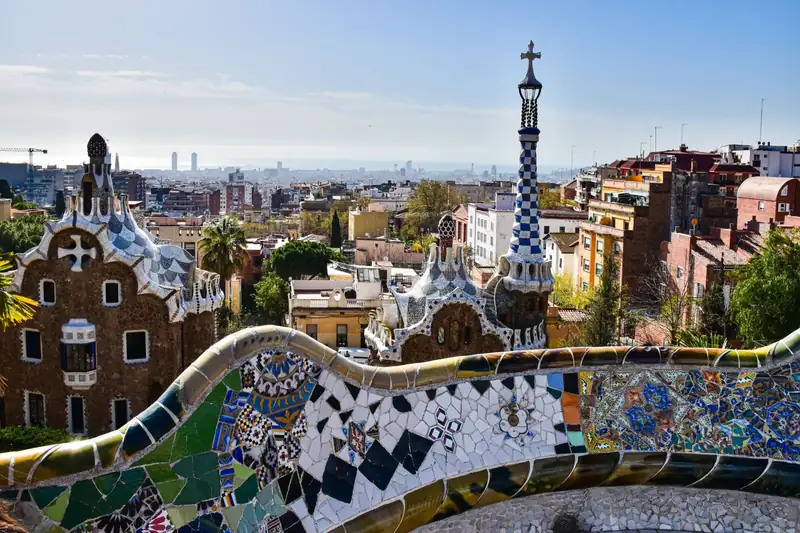
Cities


What changed between 2025 and 2026
The main recent changes are:
- End of the golden visa (April 3, 2025): Ley Orgánica 1/2025 (Organic Law) of January 2 abolished all types of investor visas and residence permits under Ley 14/2013 (Arts. 63 to 67).
- New immigration regulations (May 20, 2025): Real Decreto 1155/2024 (Royal Decree) replaced the 2011 regulations. It was amended by Real Decreto 316/2026, and parts of it were annulled by the Spanish Supreme Court (Tribunal Supremo) on July 8, 2026.
- End of the “grandchildren's law” deadline (October 22, 2025): the deadline under Ley 20/2022, de Memoria Democrática (Democratic Memory Law) expired.
- 2026 extraordinary regularization: Real Decreto 316/2026 opened an exceptional route, with applications accepted until June 30, 2026, for people who were already in Spain before January 1, 2026. That deadline has passed.
The citizenship rules of the Spanish Civil Code (Código Civil, Arts. 17 to 26) did not change during this period (consolidated version in the BOE, Spain's Official State Gazette).
Citizenship by residence: two years for Brazilians
The general rule is ten years. Article 22 of the Civil Code reduces the period to two years for “nacionales de origen” (nationals by origin) of Ibero-American countries, Andorra, the Philippines, Equatorial Guinea or Portugal, and for people of Sephardic origin. A Brazilian by birth is therefore entitled to the two-year period. Those who became Brazilian by naturalization do not benefit from it.
How the two years are counted
- Residence must be legal, continuous and immediately preceding the application (Art. 22.3).
- A stay for studies (estancia) is not residence, and Spanish courts have held that this time does not count. Stays as a tourist or in irregular status do not count either.
Other requirements
- Good civic conduct and sufficient integration into Spanish society (Art. 22.4).
- DELE A2 and CCSE: integration is demonstrated through two exams administered by the Instituto Cervantes (Ley 19/2015, Final Provision 7). Brazilians are not exempt from the DELE A2 (Spanish language) exam, as that exemption applies only to nationals of countries where Spanish is an official language (Real Decreto 1004/2015, Art. 6.5). The CCSE (constitutional and sociocultural knowledge of Spain) is taken at exam centers in Spain. According to the Instituto Cervantes, the CCSE certificate is valid for four years, and the DELE diploma has indefinite validity. Minors under 18 are exempt from both exams.
- Fee: according to the Ministerio de Justicia, the current fee is €104.05.
Procedure
The application is filed electronically through the Ministerio de Justicia's online portal (sede electrónica). The maximum period for a decision is one year. If no decision is issued, the application is deemed denied (negative administrative silence) (Real Decreto 1004/2015, Art. 11.3). Once citizenship is granted, the applicant has 180 days to swear or promise allegiance to the King and obedience to the Constitution and the laws, and to request registration in the Spanish Civil Registry (Registro Civil). Otherwise, the grant lapses (Art. 21.4 of the Civil Code; Orden JUS/1625/2016, Art. 12).
Dual citizenship: do Brazilians have to renounce?
No. Brazil and Spain do not have a bilateral dual nationality treaty, but the practical result is dual citizenship:
- On the Spanish side: Article 23(b) of the Civil Code requires renunciation of the previous nationality, but exempts “naturales” (natives) of Ibero-American countries, Andorra, the Philippines, Equatorial Guinea and Portugal from this requirement.
- On the Brazilian side: since Constitutional Amendment 131/2023 (Emenda Constitucional), a Brazilian loses Brazilian citizenship only by filing an express request with the competent Brazilian authority, except in situations that would result in statelessness (Art. 12, § 4, II, of the Constitution).
For those who are already Spanish, Article 24 of the Civil Code also provides that acquiring the nationality of an Ibero-American country, such as Brazil, is not enough to lose Spanish nationality of origin.
Citizenship by origin, by option and by marriage
Children of Spanish nationals (citizenship by origin)
Anyone born to a Spanish father or mother, in any country, is Spanish by origin (Art. 17.1.a of the Civil Code). Citizenship is recognized upon registration of the birth in the Spanish Civil Registry, as a rule through the consulate. Note: a person who was born and lives abroad, whose Spanish father or mother was also born abroad, and who holds another nationality through the place of residence loses Spanish nationality if they do not declare their wish to retain it within three years of reaching the age of majority or emancipation (Art. 24.3).
Option
Article 20 of the Civil Code allows a person to “opt” for Spanish nationality, by declaration, in the following cases:
- those who are or have been under the parental authority (patria potestad) of a Spanish national, such as the child of a person who became a naturalized Spaniard. As a rule, the option lapses at age 20;
- those whose father or mother was originally Spanish and born in Spain. In this case, there is no age limit (Art. 20.3);
One year of residence
Article 22.2 reduces the required residence to one year for, among others:
- those who, on the date of the application, have been married to a Spanish national for one year, without legal or de facto separation. Marriage alone does not confer citizenship: the year of legal residence and the other requirements, including DELE A2 and CCSE, are still necessary;
- the widow or widower of a Spanish national, if they were not separated on the date of death;
- those born in Spain or who did not exercise the option within the deadline;
- those born outside Spain whose father, mother, grandfather or grandmother was originally Spanish. This is the main alternative for grandchildren now that the Democratic Memory Law route has ended.
Democratic Memory Law (“grandchildren's law”): deadline expired
Additional Provision 8 of Ley 20/2022 allowed the children and grandchildren of Spanish exiles, the children of Spanish women who lost their nationality by marrying foreigners before 1978, and the adult children of those who obtained nationality through this route to opt for Spanish nationality. The law set a period of two years from its entry into force, extendable only once for one more year. The extension was approved, and the deadline expired at 11:59 p.m. (local time) on October 22, 2025.
According to the Consulate General of Spain in São Paulo, no new applications have been accepted since October 23, 2025. Those who filed their application within the deadline and received confirmation continue with the procedure.
As of September 2026, there are proposals in the Spanish Parliament to reform the Civil Code and create a permanent route for descendants of Spanish nationals, but none has been approved. Currently, descendants may rely on:
- the option under Article 20.1.b), if the father or mother was originally Spanish and born in Spain;
- citizenship by residence after one year (Art. 22.2.f), for children and grandchildren of Spanish nationals by origin, after obtaining a residence permit;
- job-search visas for children and grandchildren of Spanish nationals by origin (Real Decreto 1155/2024, Arts. 43 and 44), which depend on the quotas set in each annual ministerial order.
Visas and permits to live in Spain
Brazilians enter Spain as tourists without a visa, but that stay is not residence. To live in the country, the main routes are:
Non-lucrative residence
This permit is intended for those who will live on their own income or assets, without working in Spain. Applicants must show means equivalent to 400% of the IPREM per month (IPREM is Spain's public income reference index) for the main applicant and 100% of the IPREM for each dependent family member, for the duration of the permit, as well as health insurance and a clean criminal record (Real Decreto 1155/2024, Arts. 61 and 62). The initial permit is valid for one year. Each renewal is valid for two years and requires, among other conditions, more than 183 days of actual residence per year (Art. 64). See the Ministerio de Inclusión fact sheet.
International telework (“digital nomad”)
Created by Ley 28/2022 (the Startups Law) within Ley 14/2013 (Arts. 74 bis to 74 quinquies), this route is intended for people who work remotely for companies outside Spain (self-employed workers may have up to 20% Spanish clients). It requires a university degree or three years of professional experience, and a relationship of at least three months with the foreign company, which must have been operating for at least one year. The visa is valid for up to one year. The residence permit applied for in Spain is valid for up to three years and is renewable for two-year periods.
Highly qualified professionals and entrepreneurs
Ley 14/2013 also governs highly qualified professionals, including the EU Blue Card (Art. 71), and entrepreneurs with an innovative project assessed by ENISA (Empresa Nacional de Innovación) (Arts. 69 and 70; three-year permit, renewable for two years).
Employment or self-employment
As a rule, this requires a job offer and a check of the national employment situation (labor market test), or a self-employment business plan. Renewals are now valid for four years (Real Decreto 1155/2024, Arts. 81 and 87).
Studies
Students receive a stay permit (estancia), not residence. For higher education, it is valid for the length of the program and allows work of up to 30 hours per week (Real Decreto 1155/2024, Arts. 55 and 57). After completing the program, it is possible to switch to residence and work (Art. 190), and holders of a higher-education degree may apply for up to 24 months to look for a job or start a business (Ley 14/2013, Additional Provision 17). See the Consulate in São Paulo.
Family members of Spanish nationals
The spouse, the partner (registered, or with 12 months of proven cohabitation), children under 26 or dependent children, and dependent ascendants of a Spanish national have their own permit, which allows them to work and is valid for up to five years (Arts. 94 and 95).
Family reunification, arraigo and long-term residence
Family reunification: a resident may bring their spouse or partner and minor or dependent children. The application may be filed after one year of residence, once the resident has applied for authorization to reside for at least one more year (Real Decreto 1155/2024, Art. 68). Adequate housing is required, as well as income of 150% of the IPREM for the sponsor plus one family member, with an additional 50% of the IPREM for each additional member (Art. 67). As a rule, ascendants may only be brought by holders of long-term residence (Ley Orgánica 4/2000, the Foreigners Act, Art. 18). Under the Ley 14/2013 routes, the family may apply together with the main applicant (Art. 62.4).
Arraigo: the new regulations provide for five types of arraigo (settlement based on ties to Spain): second-opportunity, socio-labor, social, socio-training and family. Except for family arraigo, all require two years of continuous presence in Spain (previously, as a rule, three), and the initial permit is valid for one year (Arts. 125 to 127). These routes serve to regularize people already in the country, not to plan a move from Brazil.
Long-term residence: after five years of legal and continuous residence, a foreign national may apply for long-term residence (national or EU). Absences of up to six consecutive months, totaling no more than ten months overall, do not interrupt continuity. Periods of study count as half (Art. 176).
Supreme Court decision (July 8, 2026): the judgment annulled specific provisions, such as the general obligation to interact with the administration electronically (Art. 197.2) and the requirement that the union of family members of Spanish nationals have been formed under Spanish law (Art. 94.1.f).
The end of the Spanish golden visa and what remains
Final Provision 21 of Ley Orgánica 1/2025 repealed Articles 63 to 67 of Ley 14/2013, effective April 3, 2025 (La Moncloa). Since then, no new investor residence applications are accepted in any form: real estate, capital, public debt, deposits or business projects.
The law established two transitional rules:
- applications filed before April 3, 2025 are decided under the law in force on the date of the application;
- investor visas and permits valid on that date remain valid, and renewals are decided under the rules in force on the date of the initial permit.
Investment alone no longer grants residence. The alternatives are non-lucrative residence, for those with assets, and the entrepreneur route, for those with an innovative project assessed by ENISA.
Practical points for Brazilians
- Brazilian documents: birth and marriage certificates (preferably full-content and recently issued) and a criminal record certificate. Documents must be apostilled in Brazil under the Hague Apostille Convention and translated into Spanish by a traductor-intérprete jurado (sworn translator-interpreter) appointed by the Spanish Ministry of Foreign Affairs (official list). Discrepancies in names or dates should be corrected beforehand through rectification of the civil record
- NIE: the número de identidad de extranjero (foreigner identification number) is personal and permanent and is required for contracts, bank accounts and property purchases (Real Decreto 1155/2024, Art. 205). Residents also receive the TIE (foreigner identity card).
- Empadronamiento: registration in the municipal register of residents (padrón). It is mandatory and serves as proof of address and length of stay.
- Tax residence (overview): under the Spanish personal income tax (IRPF) law (Ley 35/2006, Art. 9), a person is a tax resident of Spain if, among other criteria, they stay in the country for more than 183 days in the calendar year or have the main center of their economic interests there. The move also requires planning in Brazil, such as the definitive departure for tax purposes, and a review of the Brazil–Spain double taxation convention (see the similar reasoning in Brazil–Portugal tax residence).
- Driver's license: a Brazilian driver's license (CNH) may be used to drive in Spain for up to six months after normal residence is established (Reglamento General de Conductores, Art. 21). After that, it must be exchanged (canje) for a Spanish license, under the reciprocal recognition agreement between Spain and Brazil.
How Sene & Araújo can help
Sene & Araújo is a law firm with offices in São Paulo and Albufeira, with lawyers admitted to the Brazilian Bar Association (OAB) and the Portuguese Bar Association (Ordem dos Advogados). We do not have lawyers admitted to practice in Spain. We act as advisors and as the point of contact for Brazilian clients, working in coordination with local professionals when the procedure so requires. The work is organized in two stages:
- Preliminary case review and feasibility opinion: in a preliminary consultation, we examine your family history, professional and financial profile, documents and objectives, and we identify the possible routes, the risks and the timeline, including how the two years for citizenship are counted.
- Assistance with the procedures: based on the opinion, we support the client throughout the chosen procedures.
Our services include:
- Citizenship and immigration consulting: guidance on the appropriate route (origin, option, residence, marriage or visa).
- Assistance with acquiring citizenship: documentation, guidance on the DELE and CCSE, preparation of the application and follow-up through to the oath.
- Assistance with visas and residence: documentation for the visa, permits, renewals and family reunification.
- Consular procedures: appointments and applications at the Spanish consulates in Brazil.
- Monitoring of procedures in Spain: follow-up of the procedures, in coordination with local professionals when necessary.
- Certificate searches in Brazil and Spain: issuance of certificates, apostilles, sworn translations, rectification of civil records and transcription of foreign civil acts in Brazil, as well as powers of attorney.
Decisions rest with the Spanish authorities, and each case depends on a review of the documents. For an initial review, contact our team.
Legal basis and official sources
- Spanish Civil Code (Código Civil), Arts. 17 to 26 (nationality) — consolidated text, BOE
- Ley 19/2015 of July 13, Final Provision 7 (procedure for citizenship by residence; DELE A2 and CCSE)
- Real Decreto 1004/2015 of November 6 (Regulations on the procedure for citizenship by residence), Arts. 6 and 11
- Orden JUS/1625/2016 of September 30 (processing of citizenship by residence), Art. 12
- Ministerio de Justicia — Spanish citizenship by residence (requirements and €104.05 fee)
- Ministerio de Justicia — Online portal: application for citizenship by residence
- Instituto Cervantes — Frequently asked questions about the CCSE (exemptions and 4-year validity)
- Instituto Cervantes — What is the DELE (indefinite validity; A2 for citizenship)
- Ley 20/2022 of October 19, de Memoria Democrática, Additional Provision 8
- Consulate General of Spain in São Paulo — Citizenship under Ley 20/2022 (deadline ended October 22, 2025)
- Ley 14/2013 of September 27 (entrepreneurs, qualified professionals, international telework; Arts. 63–67 repealed) — consolidated text
- Ley Orgánica 1/2025 of January 2, Final Provision 21 (end of investor residence, effective April 3, 2025)
- La Moncloa — “El 3 de abril entra en vigor el fin de las Golden Visa” (April 2, 2025)
- Real Decreto 1155/2024 of November 19 (Reglamento de Extranjería, in force since May 20, 2025) — consolidated text as of September 22, 2026
- Real Decreto 316/2026 of April 14 (amendment of the Reglamento de Extranjería; extraordinary regularization until June 30, 2026)
- Spanish Supreme Court judgment of July 8, 2026 (partial annulment of RD 1155/2024) — BOE
- Ley Orgánica 4/2000 (Foreigners Act), Art. 18 — consolidated text
- Ministerio de Inclusión — Fact sheet: initial non-lucrative temporary residence permit
- Consulate General of Spain in São Paulo — Student visa
- Ley 35/2006 (IRPF), Art. 9 (tax residence) — consolidated text
- Real Decreto 818/2009 (Reglamento General de Conductores), Art. 21
- Spain–Brazil Agreement on the reciprocal recognition and exchange of driver's licenses (2007) — BOE-A-2009-4137
- Spanish Ministry of Foreign Affairs — Sworn translator-interpreters (traductores-intérpretes jurados)
- HCCH — Apostille Convention (status table)
- Constitutional Amendment 131 of October 3, 2023 (loss of Brazilian citizenship)
- INE — Estadística Continua de Población, July 1, 2026 (provisional data, published August 6, 2026)
- INE — Encuesta de Población Activa, Q2 2026 (published July 28, 2026)
- INE — Activity, unemployment and employment rates by province (EPA, table 65349)
- INE — Encuesta de Presupuestos Familiares, year 2025 (published June 25, 2026)
- INE — Resident population by nationality, January 1, 2025 (table 56936)
- INE — Resident population by country of birth, January 1, 2025 (table 56937)
- Brazilian Ministry of Foreign Affairs — Comunidades Brasileiras no Exterior, base year 2023 (July 2024)
- Spanish Constitution of 1978, Arts. 3, 137 and 143 — BOE
- Ley 16/2003, de cohesión y calidad del Sistema Nacional de Salud, Art. 3 — BOE
- Seguridad Social — Health care (insured persons and beneficiaries)
- Ley Orgánica 2/2006, de Educación, Art. 4 — BOE
- Real Decreto 889/2022 (homologation and equivalence of foreign university degrees) — BOE
- Ministerio de Ciencia, Innovación y Universidades — Declaration of equivalence of foreign degrees
- Real Decreto 236/2002 (summer time) — BOE
- Aena — Destinations from Adolfo Suárez Madrid-Barajas Airport
- Aena — Destinations from Josep Tarradellas Barcelona-El Prat Airport



Common questions
Didn't find your question? Talk to our team on WhatsApp.
How long must a Brazilian live in Spain before applying for citizenship?
Two years of legal and continuous residence immediately preceding the application, for Brazilians by birth (Art. 22 of the Civil Code). The period drops to one year in cases such as one year of marriage to a Spanish national, or descent from a father, mother, grandfather or grandmother who was originally Spanish. Naturalized Brazilians are, as a rule, subject to the general ten-year period.
Will I lose my Brazilian citizenship if I become Spanish?
No. Spain exempts nationals of Ibero-American countries, such as Brazil, from renouncing their previous nationality (Art. 23(b) of the Civil Code). Since Constitutional Amendment 131/2023, a Brazilian loses Brazilian citizenship only upon express request. Even without a bilateral treaty, it is possible to keep both.
Do Brazilians need to take the DELE A2?
Yes. The DELE exemption applies only to those who already hold a DELE A2 or higher and to nationals of countries where Spanish is an official language, and Brazil is not on that list (Real Decreto 1004/2015, Art. 6.5). Applicants must also pass the CCSE, an exam on the Spanish Constitution and Spanish society administered in Spain. Minors under 18 are exempt from both exams.
Does time as a student count toward citizenship?
As a rule, no. A student permit is an estancia (stay), not residence, and Spanish courts have held that this time does not count toward the two years. The count begins when the person obtains a residence permit.
Can I still apply for citizenship under the grandchildren's law (Democratic Memory Law)?
Not for new applications. The deadline under Ley 20/2022, already extended once, expired on October 22, 2025. Those who filed their application within the deadline continue with the procedure. Grandchildren of Spanish nationals by origin can still obtain citizenship after one year of legal residence in Spain (Art. 22.2.f of the Civil Code). There are reform proposals in Parliament, but none had been approved as of September 2026.
Is there still a golden visa in Spain?
No. Ley Orgánica 1/2025 abolished all types of investor residence as of April 3, 2025. Applications filed before that date are decided under the previous law, and permits already granted may be renewed under the rules in force on the date of the initial grant.
How much do I need to show for the non-lucrative residence visa?
Real Decreto 1155/2024 (Art. 62) requires financial means equivalent to 400% of the IPREM per month for the main applicant plus 100% of the IPREM per month for each dependent family member, calculated for the duration of the permit. The visa does not allow work, and renewal requires more than 183 days of actual residence per year.
Can I bring my family to Spain?
Yes. Under the international telework, highly qualified professional and entrepreneur routes (Ley 14/2013), the family may apply together with the main applicant. Under the other routes, reunification may be requested after one year of residence, with adequate housing and financial means (Real Decreto 1155/2024, Arts. 67 and 68).
Latest articles
Selling property in Brazil while living in Portugal
Power of attorney or videoconference, capital gains tax of 15% to 22.5% without the exemptions available to residents, withholding by the buyer, remittance, and credit for the tax against Portuguese IRS: what changes for those living in Portugal.
I inherited property in Brazil and live in Portugal: step by step
Out-of-court inventory before a notary without traveling, a power of attorney with special powers, documents, ITCMD, and the choice of the property's value in the partition: a step-by-step guide for those who inherited in Brazil and live in Portugal.
INSS retirees in Portugal: income tax at progressive rates in 2026
Since Normative Instruction IN RFB 2,299/2025, pensions paid to people living in Portugal are taxed under the progressive table. See the calculation for 2026, the effect on Portuguese IRS, and how to claim back the 25% withheld in recent years.