Portuguese Citizenship and Residence Visas
Brazilians are the largest foreign community in Portugal, and the rules on residence and citizenship changed considerably in 2025 and 2026.
Children and grandchildren of Portuguese citizens have access to citizenship by origin; spouses and partners, adoptees and residents may acquire it. For applications filed since May 19, 2026, naturalization requires seven years of legal residence for Brazilians. There is no need to renounce Brazilian citizenship.
The main routes are the D1 to D7 national visas (employed work, independent activity, highly qualified activity, study, family reunification and own income) and the Golden Visa (Residence Permit for Investment Activity – ARI), which no longer accepts real estate purchases.
Visas are applied for at Portugal's consular posts in Brazil; residence permits, with AIMA (Agency for Integration, Migration and Asylum); citizenship, with the Institute of Registries and Notary (IRN) (Central Registry Office, Conservatória dos Registos Centrais), including through the online platform, with representation by a lawyer.
Organic Law 1/2026 (Lei Orgânica), in force since May 19, 2026, amended the Nationality Act (Lei da Nacionalidade), and the 2025 and 2026 foreigners laws changed the CPLP permit, family reunification and the study visa. On this page, updated in September 2026, we bring together the citizenship and residence routes currently in force and point to the pages where each one is explained in detail. Unlike other European countries, here Sene & Araújo acts directly: we have offices in São Paulo and in Albufeira, with lawyers admitted to the Brazilian Bar Association (OAB) and to the Portuguese Bar Association (Ordem dos Advogados).
Living in Portugal
- Capital
- Lisbon
- Population
- 11.4 million inhabitants (INE, December 2025)
- Language and currency
- Portuguese · Euro (€)
- Time zone
- +3 h from Brasília (+4 h during European summer time); Azores: 1 h less
- Brazilian community
- 493,622 Brazilian residents, the largest foreign community (AIMA, 2025)
- Political system
- Semi-presidential republic · European Union and Schengen
The country at a glance
Portugal has about 11.4 million inhabitants and is made up of the mainland and the autonomous regions of the Azores and Madeira, which have their own government and parliament. The population grew by 824,914 people between 2021 and 2025, mainly through immigration, and foreign residents now account for 14.0% of the total (INE, Resident Population Estimates 2025). The North is the most populous region (33.2% of residents), followed by Greater Lisbon (21.1%). The climate is mild on the coast, rainier in the North and hotter and drier in the Alentejo and the Algarve.
Cost of living
Housing is the largest item in the budget. According to INE's Household Budget Survey 2022/2023, average annual spending per household was €23,900, of which 39.3% went to housing, water, electricity and gas; in the Lisbon Metropolitan Area, it reached €26,891. Rents have risen since then: in Q1 2026, the median rent on new leases was €9.46/m² nationwide, 9.1% higher than a year earlier, with €14.38/m² in Greater Lisbon, €10.71/m² in the Algarve and €10.13/m² in the Porto Metropolitan Area (INE, Housing Rental Statistics).
Health care
The National Health Service (Serviço Nacional de Saúde, SNS) is public. A foreign national with legal residence can obtain an SNS user number (número de utente), assigned on the first visit to a public health center or hospital (gov.pt). For expenses to be covered by the SNS, the registration must include an identity document, a NIF, an address in Portugal and a valid residence permit (gov.pt, health care for migrants). Before residence, visa applications require health insurance or, for those entitled to it, the Certificate of Entitlement to Medical Care (CDAM) issued in Brazil under the Brazil–Portugal social security agreement.
Education
Schooling is compulsory from ages 6 to 18, and within that scope education is universal and free (Law 85/2009). Children can be enrolled in public, private or cooperative schools. To work in a regulated profession with a Brazilian degree, recognition is required; see recognition of degrees.
Work and the economy
Services, tourism, trade, technology and industry account for most jobs. According to INE, the unemployment rate was 5.7% in August 2026 (provisional estimate, released on September 30, 2026; Monthly Employment and Unemployment Estimates). In Q2 2026, it was 5.3%, the lowest figure since the series began in 2011, with 5.40 million people employed (Employment Statistics).
Brazilian community
Brazilians have been the largest foreign community in Portugal for the sixth year in a row: 493,622 residents on December 31, 2025, 31.1% of the 1,585,854 foreign nationals registered by AIMA (Migration and Asylum Report 2025). INE, using a different methodology, estimates 574,195 residents of Brazilian nationality (35.9% of foreign nationals). Brazilians with legal residence may also apply for the Statute of Equality of Rights and Duties (Estatuto de Igualdade de Direitos e Deveres), provided for in the Treaty of Porto Seguro.
Language and integration
Portuguese is the official language (Constitution, Art. 11), which makes adapting easier, but there are differences in vocabulary, pronunciation and administrative language that are worth knowing. For citizenship, knowledge of the language is presumed for Brazilians; culture, history, national symbols and the organization of the State must be proven. Permanent residence requires basic Portuguese, and Law 61/2025 provides for integration measures for reunified family members.
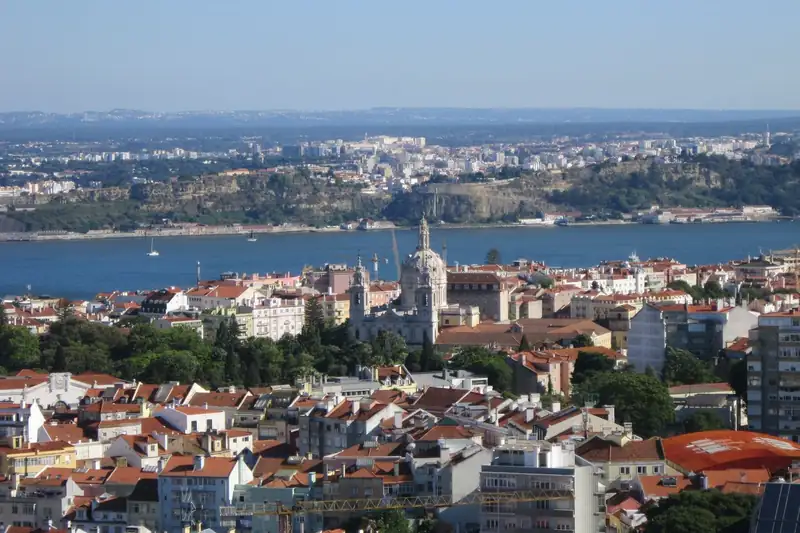
Cities


The citizenship rules in force: Organic Law 1/2026
Organic Law 1/2026, published on May 18, 2026, amended the Nationality Act (Law 37/81) and entered into force the following day. The most relevant changes for Brazilians are:
- Naturalization by residence: increased from five to seven years of legal residence for nationals of Portuguese-speaking countries, such as Brazil, and for European Union citizens; ten years for everyone else (Article 6(1)(b)).
- Counting the time: periods of legal residence are added together within a maximum window of nine years (for Brazilians), and the time spent waiting for a decision on the residence permit application no longer counts (repeal of Article 15(4)).
- New knowledge requirements: Portuguese language and culture, history and national symbols, fundamental rights and duties and the political organization of the State, as well as a declaration of adherence to the principles of the democratic rule of law. For Brazilians, only knowledge of the language is presumed (Article 6(10)).
- Grandchildren: they still have access to citizenship by origin, but must now also meet these requirements (Article 1(3)).
- Great-grandchildren: they gained their own naturalization route, with five years of legal residence in Portugal (Article 6(8)).
- Ascendants: naturalization of parents and grandparents of Portuguese citizens by origin no longer exists for new applications.
Transitional rule: the previous law applies to proceedings pending on May 19, 2026 (Article 7), as the Ministry of Justice has confirmed. For online applications, the IRN has indicated that the date of submission on the platform is what counts. The format of the knowledge tests depends on the amendment of the Portuguese Nationality Regulation, which is still to be monitored.
The full overview is in the article New Nationality Act: what changed for Brazilians, and examples of how to count the time are in how to count the seven years.
Citizenship by descent: children, grandchildren and great-grandchildren
Children of Portuguese citizens
The child of a Portuguese father or mother is entitled to citizenship by origin (by attribution), regardless of the place of birth and even if the parent has already died. Because it is citizenship by origin, it can later be passed on to descendants. In some cases, such as when both parents are Portuguese, the parents' marriage must first be transcribed. See the documents in citizenship for children of Portuguese citizens.
Grandchildren and great-grandchildren
The grandchild of a grandfather or grandmother with Portuguese citizenship by origin also has access to citizenship by origin, even if the ascendants have died (Article 1(1)(d)). For applications filed since May 19, 2026, attribution also depends on the knowledge requirements and on the absence of criminal and security impediments; for Brazilians, only knowledge of the language is presumed.
A great-grandchild has two routes: in two stages, with attribution first to the father, mother, grandfather or grandmother descended from the Portuguese great-grandparent (who must be alive) and then to the great-grandchild; or through the naturalization created by Organic Law 1/2026 for descendants in the 3rd degree of Portuguese citizens by origin who have legally resided in Portugal for at least five years, which is a discretionary power of the Government and not an automatic right. Details in citizenship for grandchildren and great-grandchildren.
Ascendants (previous regime)
The route for parents and grandparents of Portuguese citizens by origin applies only to applications filed by May 18, 2026, which are still being examined under the previous law. Those who did not apply by that date should consider other routes, such as residence. See citizenship for ascendants.
Marriage, de facto union and adoption
Marriage or de facto union (união de facto)
Anyone who is married to, or lives in a de facto union with, a Portuguese citizen may acquire citizenship by declaration in three situations:
- more than three years of marriage or union and children in common with Portuguese citizenship;
- more than three years and ties of effective connection to the national community;
- more than six years, in which case there is no opposition on the grounds of lack of effective connection.
In any case, the criminal and security impediments provided for by law apply. The de facto union must be recognized by a Portuguese court: through a recognition action in Portugal or through review and confirmation of a foreign judgment, and the document must state the date on which the union began. See citizenship by marriage or de facto union.
Adoption
A foreign national adopted by a Portuguese citizen acquires citizenship by declaration (Article 5), provided that the adoption was granted or confirmed by a final and unappealable decision and that there are no grounds for opposition (Article 9). An adoption granted in Brazil must, as a rule, be reviewed and confirmed by a Portuguese court. See citizenship by adoption.
Naturalization by length of residence
An adult foreign national legally residing in Portugal may apply for naturalization when they meet, at the time of the application, all the requirements of Article 6(1) of the Nationality Act:
- seven years of legal residence, for Brazilians, added together within a maximum window of nine years;
- sufficient knowledge of the Portuguese language and culture, of history and national symbols, and of fundamental rights and duties and the political organization of the State;
- a solemn declaration of adherence to the principles of the democratic rule of law;
- absence of the convictions and threats to security provided for by law;
- ability to support oneself.
The time is proven by a document issued by AIMA. Permanent residence is not a requirement for naturalization. Those who filed their application by May 18, 2026 remain subject to the five years of the previous law; those who had not yet applied, even with five full years, fall under the new law.
See citizenship by length of residence and, for cases stalled at the IRN, urgency and delays in citizenship proceedings.
The citizenship process, step by step
- Assessment: identify the route (child, grandchild or great-grandchild, spouse or partner, adoptee or resident) and the applicable law, based on the date of the application.
- Documents: gather the Brazilian and Portuguese certificates, with the required formalities (full-text copy, notarial certification of signature, Hague Apostille) and, depending on the route, criminal records and the AIMA document.
- Application: filing with the IRN, as a rule through the online platform, by a lawyer holding a power of attorney.
- Follow-up: responding to notifications and, if the process is delayed, requesting urgent processing where applicable or using administrative and judicial remedies.
- Registration: once the decision is favorable, the Portuguese birth record is drawn up, which allows the applicant to request the citizen card and passport.
The complete roadmap is in Portuguese citizenship step by step.
Dual citizenship: Portugal does not require renunciation of the previous nationality, and, since Constitutional Amendment 131/2023 (Emenda Constitucional), a Brazilian loses Brazilian citizenship only upon express request.
Residence visas: D1 to D7
Brazilians can enter Portugal as tourists without a visa, but that stay is not residence. Since the end of the expression of interest (manifestação de interesse) procedure (Decree-Law 37-A/2024), the rule is to obtain the residence visa at the Portuguese consular post before traveling and, after arriving, to apply to AIMA for the corresponding residence permit. The main visas are:
- D1 – Employed work: for those with an employment contract or a promise of employment contract in Portugal.
- D2 – Entrepreneurs and independent workers: for self-employed professionals and for those who will invest or set up a company, including through the Start Up Visa program.
- D3 – Highly qualified activity: teaching, research and qualified activities, with their own pay rules, and the EU Blue Card.
- D4 – Study: study, exchange, internship or volunteering. Since Law 62/2026, students and interns who enter without a residence visa can no longer apply for the permit directly in Portugal.
- D5 – Higher education: for students who already hold a residence permit from another EU Member State.
- D6 – Family reunification: family members of residents. Since Law 61/2025, the resident generally needs two years of residence permit, with exceptions (minor children, holders of an ARI, of a highly qualified activity permit or of an EU Blue Card, among others).
- D7 – Own income and retirees: for those who live on retirement pensions, rents, investments or other regular income.
The temporary permit is generally valid for two years and renewable for periods of three years (Law 23/2007, Article 75). See also the page on residence permits.
Golden Visa (ARI): what remains in force
The Residence Permit for Investment Activity (ARI) still exists, but since Law 56/2023 (in force since October 7, 2023), it no longer accepts new applications based on the purchase of real estate, urban regeneration or a simple capital transfer. The options in force include:
- creation of at least 10 jobs;
- at least €500,000 in non-real-estate investment funds set up under Portuguese law, in scientific research, or in the incorporation of a company headquartered in Portugal together with the creation of five permanent jobs;
- at least €250,000 for artistic production or national cultural heritage.
The minimum stay is 7 days in the first year and 14 days in each subsequent two-year period, and the family can be included through reunification without the two-year waiting period. Real estate ARIs granted before October 2023 can still be renewed. Time as an ARI holder counts as legal residence for citizenship, and holding an ARI does not, by itself, make anyone a tax resident in Portugal. See Golden Visa in Portugal and the AIMA page.
Residence permits, AIMA and the CPLP route
AIMA (Agency for Integration, Migration and Asylum) decides applications for grant and renewal. The key points are:
- Legal time limits: 90 days for the grant, extendable by 30 in exceptional cases, and 60 days for renewal (Article 82 of Law 23/2007).
- Renewal: must be requested at least 30 days before expiry, currently through the Renewals Portal, depending on the card's expiration date.
- Absences: the temporary permit may be canceled for absences, without justifiable reasons, of six consecutive months or eight non-consecutive months during its validity period (Article 85).
- Permanent residence: after five years of temporary permit, with knowledge of basic Portuguese, among other requirements (Article 80).
CPLP residence permit
Brazilians can apply to AIMA for the CPLP residence permit (Article 87-A). With Law 61/2025, in force since October 23, 2025, the application now depends on a residence visa obtained at the consulate. It is no longer possible to enter as a tourist and apply for the CPLP permit in Portugal. Since Law 9/2025, the CPLP card follows the uniform format used in the European Union.
When AIMA does not decide within the time limit, administrative and judicial remedies are available, subject to the limits of the new Article 87-B. See residence permits and administrative action against AIMA and the IRN.
Brazilian documents and life after the move
Documents
Portuguese proceedings use Brazilian birth and marriage certificates, as a rule in full-text form, with notarial certification of the registrar's signature and a Hague Apostille. Discrepancies in names or dates must be corrected beforehand, through correction of registry records. Old Portuguese certificates can be located through a document search. For those who are already Portuguese, marriages and deaths that occurred in Brazil must be entered in the Portuguese civil registry by transcription. Many applications can be made remotely, with powers of attorney between Brazil and Portugal.
After the move
- NIF: the Portuguese tax identification number is needed to rent a home, open a bank account, sign contracts and apply for residence, and it can be obtained before traveling. See NIF.
- Tax residence: under Article 16 of the IRS Code, a person is a resident if they stay in Portugal for more than 183 days in any 12-month period or have a home that indicates the intention to keep it as their habitual residence. The move also requires the definitive departure procedure before the Brazilian Federal Revenue Service (Receita Federal) and an analysis of the Brazil–Portugal tax treaty. See Brazil–Portugal tax residence.
- INSS retirees: the benefit continues to be paid in Portugal, with proof of life abroad and specific tax rules. See INSS retirees in Portugal.
- Degrees: regulated professions require recognition. See recognition of degrees.
How Sene & Araújo handles your case
In Portugal, Sene & Araújo does not rely on intermediaries: we have an office in Albufeira, with lawyers admitted to the Portuguese Bar Association (Ordem dos Advogados), who file and follow applications before the IRN, AIMA, the Portuguese courts and the Tax Authority (Finanças). In Brazil, the São Paulo team, with lawyers admitted to the OAB, handles the certificates, record corrections, powers of attorney and the tax and succession matters linked to the move.
- Case review: we examine the family history, the documents, the history of residence cards and the goals, and we indicate the possible routes, the applicable law and the timeline.
- Preparation: we organize the Brazilian and Portuguese documentation, including certificate searches, apostilles and record corrections.
- Application and follow-up: we file the citizenship, visa or residence permit application, respond to notifications and keep track of renewal deadlines.
- Delay or refusal: we assess a request for urgent processing, an administrative complaint or an action before the Portuguese administrative courts.
- Life in both countries: NIF, tax residence, INSS retirement benefits, assets in Brazil and succession planning.
Decisions always rest with the Portuguese authorities, and each case depends on a review of the documents. Meet our team or contact us for an initial review.
Legal basis and official sources
- Organic Law 1/2026 (Lei Orgânica) of May 18 (amendment to the Nationality Act) — Diário da República 95/2026
- Law 37/81 (Nationality Act), Articles 1, 3, 5, 6, 9 and 15 — consolidated version
- Portuguese Nationality Regulation (Regulamento da Nacionalidade Portuguesa) — Decree-Law 237-A/2006, consolidated version
- justica.gov.pt — Nationality Act: new rules take effect on May 19
- IRN — Citizenship applications submitted online (May 7, 2026)
- Law 23/2007, the Foreigners Act (Lei de Estrangeiros), Articles 75, 78, 80, 82, 85, 87-A, 87-B, 90-A and 98 — consolidated version
- Law 61/2025 of October 22 (CPLP permit, family reunification, Article 87-B)
- Law 62/2026 of September 10 (amendments to the Foreigners Act)
- Decree-Law 37-A/2024 of June 3 (end of the expression of interest)
- Law 56/2023, of October 6 (Mais Habitação), Arts. 42 and 43
- AIMA — Residence Permit for Investment (Art. 90-A)
- IRS Code, Art. 16 (residence) — Portal das Finanças
- Constitutional Amendment 131/2023 (loss of Brazilian nationality)
- HCCH — Apostille Convention (status table)
- INE — Resident Population Estimates 2025 (press release of June 22, 2026)
- INE — Monthly Employment and Unemployment Estimates, August 2026 (September 30, 2026)
- INE — Employment Statistics, Q2 2026 (August 5, 2026)
- INE — Local Housing Rental Statistics, Q1 2026 (June 26, 2026)
- INE — Household Budget Survey 2022/2023
- AIMA — Migration and Asylum Report 2025
- gov.pt — Migrants: health care in Portugal
- gov.pt — Obtaining an SNS user number
- Law 85/2009 of August 27 (compulsory schooling) — consolidated version
- Constitution of the Portuguese Republic (Article 11, official language) — consolidated version


Common questions
Didn't find your question? Talk to our team on WhatsApp.
How many years of residence does a Brazilian need for Portuguese citizenship?
For applications filed since May 19, 2026, seven years of legal residence, added together within a maximum window of nine years (Organic Law 1/2026). Applications pending on that date follow the previous law, with five years. See citizenship by length of residence.
Are grandchildren of Portuguese citizens still entitled to citizenship?
Yes. The grandchild of a grandfather or grandmother with Portuguese citizenship by origin still has access to citizenship by origin, even if the ascendants have died. Since May 19, 2026, they must also prove knowledge of culture, history, national symbols and the organization of the State; for Brazilians, only knowledge of the language is presumed. See grandchildren and great-grandchildren.
Will I lose my Brazilian citizenship if I become Portuguese?
No. Portugal does not require renunciation of the previous nationality, and, since Constitutional Amendment 131/2023, a Brazilian loses Brazilian citizenship only upon express request. It is possible to keep both.
Can I enter Portugal as a tourist and apply for residence there?
As a rule, no. The expression of interest ended in 2024, and, since Law 61/2025, the CPLP permit also depends on a residence visa. The way forward is to apply for the appropriate visa (D1 to D7) at the consulate before traveling. See residence permits.
Is it still possible to obtain the Golden Visa by buying property?
No. Since October 7, 2023, real estate purchases and urban regeneration are no longer ARI options. Non-real-estate funds, job creation and support for culture, among others, remain in force. See Golden Visa.
Does the time spent waiting for AIMA's decision count toward citizenship?
For citizenship applications filed since May 19, 2026, no. Organic Law 1/2026 repealed the rule that counted time from the residence permit application. What counts is the period with regularized status. See how to count the seven years.
Can parents of a Portuguese child still apply for citizenship?
The ascendants route was abolished for new applications by Organic Law 1/2026. Only applications filed by May 18, 2026 follow the previous law. Today, parents and grandparents of Portuguese citizens should consider other routes, such as residence. See citizenship for ascendants.
Do I need to go to Portugal to apply for citizenship?
For the descent, marriage and adoption routes, the application can be filed from Brazil, by a lawyer holding a power of attorney, with apostilled Brazilian documents. Naturalization by residence presupposes, by definition, legal residence in Portugal. See the step-by-step guide.
Latest articles
Selling property in Brazil while living in Portugal
Power of attorney or videoconference, capital gains tax of 15% to 22.5% without the exemptions available to residents, withholding by the buyer, remittance, and credit for the tax against Portuguese IRS: what changes for those living in Portugal.
I inherited property in Brazil and live in Portugal: step by step
Out-of-court inventory before a notary without traveling, a power of attorney with special powers, documents, ITCMD, and the choice of the property's value in the partition: a step-by-step guide for those who inherited in Brazil and live in Portugal.
INSS retirees in Portugal: income tax at progressive rates in 2026
Since Normative Instruction IN RFB 2,299/2025, pensions paid to people living in Portugal are taxed under the progressive table. See the calculation for 2026, the effect on Portuguese IRS, and how to claim back the 25% withheld in recent years.