Citizenship for Ascendants
Portuguese citizenship for ascendants was abolished by Organic Law 1/2026. See who applied before the change and what to assess. Contact us.
Please note: Organic Law 1/2026 (Lei Orgânica), in force since May 19, 2026, eliminated naturalization for ascendants of Portuguese citizens by origin (former Art. 6(8) of the Nationality Act). The information below applies only to applications filed by May 18, 2026, which continue to be assessed under the previous law. For new applications, ascendants of Portuguese citizens should consider other routes, such as naturalization based on legal residence.
Until May 18, 2026, an ascendant of a Portuguese citizen could acquire citizenship under Art. 6(8) of the Nationality Act (previous wording), provided they met the legal requirements.
Ascendants who have had residence – legal or not – for at least the five years immediately preceding the application could obtain naturalization if the ascendancy had been established at the time of the Portuguese citizen's birth.
One example would be a female applicant whose daughter married a Portuguese man and had a son with him: the grandson, being a Portuguese citizen by origin (a right transmitted by the applicant's son-in-law at the time of birth), would pass to his grandmother the right to citizenship by acquisition, provided she resided in Portugal (even illegally, that is, without a residence permit) during the five years preceding the application and provided the ascendancy was established at the time of the Portuguese citizen's birth.
A more practical example: a Brazilian woman marries a Portuguese man and has a son with him, a Portuguese citizen by origin, recognized as such at birth. If she is widowed or divorced, she could be naturalized through her son, provided she has resided in Portugal for the period required by law.
Documents
- Birth certificate of the Portuguese child;
- Full-content birth certificate (certidão de inteiro teor) of the Applicant, with notarial recognition (at a notary's office) of the clerk's signature and with a Hague Apostille;
- Certified copy of a valid photo ID (RG, CNH, or passport) with a Hague Apostille;
- Criminal record certificate from every country where the applicant has lived since age 16; and
- A document issued by AIMA (Agency for Integration, Migration and Asylum) proving the length of residence in the country; or documents proving residence, even if illegal, for a period of 5 years.
Step by step – receipt and review of documents
Learn how the process works to verify whether your family has a right to Portuguese citizenship
Other services in this area

Children of Portuguese citizens
Citizenship for children of a Portuguese father or mother.
Learn more →
Grandchildren and great-grandchildren
Current requirements after Organic Law 1/2026 (Lei Orgânica).
Learn more →
Marriage or de facto union
For spouses and partners of Portuguese citizens.
Learn more →
Length of residence
For those legally residing in Portugal.
Learn more →
Adoption
Citizenship for persons adopted by Portuguese citizens.
Learn more →
Urgency and delays in the process
Priority processing and what to do when the application is delayed.
Learn more →
Citizenship step by step
From documents to registration, one step at a time.
Learn more →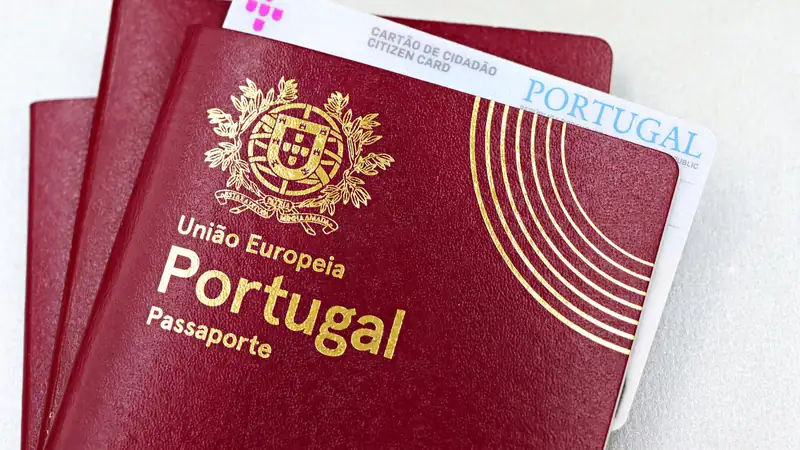
Citizen Card and passport
Portuguese documents after citizenship.
Learn more →Common questions
Didn't find your question? Talk to our team on WhatsApp.
Is it still possible to apply for Portuguese citizenship as an ascendant (father or mother) of a Portuguese citizen?
Not for new applications. Organic Law 1/2026 (Lei Orgânica), in force since May 19, 2026, eliminated naturalization for ascendants of Portuguese citizens by origin (former Art. 6(8)). Applications filed by May 18, 2026, continue to be assessed under the previous law. For new applications, ascendants should consider other routes, such as naturalization based on legal residence.
What were the requirements for those who applied by May 18, 2026?
Under the previous wording of the law, an ascendant of a Portuguese citizen could be naturalized if:
- they had resided in Portugal, legally or not, for at least the five years immediately preceding the application;
- the ascendancy had been established at the time of the Portuguese citizen's birth.
Example: a Brazilian woman who had a son with a Portuguese man, the son being a Portuguese citizen by origin, could be naturalized through him.
Which documents support an application filed under the previous regime?
An application under the previous regime requires the birth certificates of the child and of the applicant, an apostilled personal identity document, criminal records and proof of five years of residence.
- birth certificate of the Portuguese child;
- full-content birth certificate of the applicant, with notarial recognition and Hague Apostille;
- certified copy of a valid personal identity document with photo, with Hague Apostille;
- criminal records from every country where the applicant has lived since age 16;
- AIMA document showing the length of residence, or documents proving residence, even if illegal, for 5 years.
Under the previous regime, was a residence permit required for the five years?
No. For applications governed by the previous law, residence in Portugal, legal or not, during the five years immediately preceding the application counted. For this reason, proof could be provided by a document issued by AIMA proving the length of residence or by other documents proving residence, even if illegal, for a period of five years.
Latest articles

Selling property in Brazil while living in Portugal
Power of attorney or videoconference, capital gains tax of 15% to 22.5% without the exemptions available to residents, withholding by the buyer, remittance, and credit for the tax against Portuguese IRS: what changes for those living in Portugal.

I inherited property in Brazil and live in Portugal: step by step
Out-of-court inventory before a notary without traveling, a power of attorney with special powers, documents, ITCMD, and the choice of the property's value in the partition: a step-by-step guide for those who inherited in Brazil and live in Portugal.

INSS retirees in Portugal: income tax at progressive rates in 2026
Since Normative Instruction IN RFB 2,299/2025, pensions paid to people living in Portugal are taxed under the progressive table. See the calculation for 2026, the effect on Portuguese IRS, and how to claim back the 25% withheld in recent years.