Assets and Succession in Other Countries
When the family or its assets involve the United States, the Portuguese-speaking African countries, Israel or other European countries, each country applies its own rules on succession, taxation and residence.
Brazilian and Portuguese families, or families from Portuguese-speaking countries, with assets, residence or heirs in more than two countries.
United States, Angola, Mozambique, Cape Verde, Guinea-Bissau, São Tomé and Príncipe, Equatorial Guinea, Israel and European Union Member States.
Under Brazilian and Portuguese law: mapping of assets, applicable law, coordinated wills, inventory proceedings, partition and recognition of judgments. In other countries, proceedings are handled by a lawyer licensed in that country, hired by the client, with whom we coordinate at the client's request.
We organize this overall picture from the standpoint of Brazilian law and Portuguese law. Proceedings in each of these countries are conducted by a lawyer licensed in that country, hired by the client, and we handle their effects in Brazil and Portugal.
When the family and its assets go beyond the Brazil–Portugal axis
Many families assisted by the firm do not live only between Brazil and Portugal. Some have an apartment in Florida and shares with an American broker, children studying in Europe, a company in Angola or Mozambique, relatives in Cape Verde or family ties to Israel. Each of these countries has its own rules on succession, taxation and residence, and none of them ceases to apply just because the family lives in Lisbon or São Paulo.
Sene & Araújo practices Brazilian law and Portuguese law. When the situation involves other countries, our work is to organize the overall picture from the standpoint of Brazil and Portugal and handle the effects in Brazil and Portugal: applicable law, inventory proceedings, declaration of heirs and partition, recognition of judgments and documents. Proceedings in each of these other countries must be conducted by a lawyer licensed in that country, hired by the client; at the client's request, we coordinate with that lawyer. The firm does not practice law in the United States, in the Portuguese-speaking African countries, in Israel or in other European Union Member States.
On this page, we bring together the general framework as seen from Brazil and Portugal. For the Brazil–Portugal axis in detail, see our page on international succession.
Succession with assets in three or more countries
As seen from Portugal: the European Succession Regulation
For successions opened on or after August 17, 2015, Portugal applies Regulation (EU) No 650/2012. The general rule is the law of the State of the deceased's habitual residence at the time of death, applicable to the succession as a whole (Art. 21(1)), unless there is a manifestly closer connection with another State (Art. 21(2)). The law designated applies even if it is the law of a third State, such as Brazil, the United States, Angola or Israel (Art. 20).
- Choice of law (professio iuris): a person may choose, in a will, the law of the State of their nationality to govern the entire succession; a person with more than one nationality may choose any of them (Art. 22).
- Third States and renvoi: when the applicable law is that of a third State, its rules of private international law also apply, insofar as they refer to the law of a Member State or to the law of another third State that would apply its own law (Art. 34(1)). There is no renvoi when the law results from a choice made in a will (Art. 34(2)).
- Assets in third States: the competent court may, at the request of one of the parties, decline to rule on assets located in a third State if its decision is not expected to be recognized in that State (Art. 12).
- Special rules of the place where the asset is located: the rules of the country where certain real estate, companies or other special categories of assets are located that restrict or affect their succession apply regardless of the law governing the succession (Art. 30).
As seen from Brazil: law of domicile and exclusive jurisdiction
In Brazil, succession is governed by the law of the country where the deceased was domiciled, whatever the nature and location of the assets (Art. 10 of the LINDB). At the same time, Art. 23, II, of the CPC (Brazilian Code of Civil Procedure) reserves to the Brazilian courts, to the exclusion of any other, the inventory and partition of assets located in Brazil, and a foreign decision on those assets is not recognized (Art. 964).
In practice: one proceeding in each country where there are assets
Even when all the systems point to the same law, each country usually requires its own acts to transfer the assets located in its territory: inventory proceedings in Brazil, declaration of heirs and partition in Portugal, probate in the United States, an inheritance order in Israel, and specific proceedings in Angola or Mozambique. Planning seeks to ensure that these proceedings start from mutually consistent documents, particularly regarding the applicable law, the wills and the identification of the heirs.
United States: estate tax, probate and trusts
Federal estate tax for those who are neither U.S. citizens nor residents
According to the IRS, certain decedents who were neither citizens nor residents of the United States are subject to the federal tax on estates (estate tax) with respect to their U.S.-situs assets. The main points, according to the official pages consulted in September 2026:
- US$60,000 filing threshold: the executor must file Form 706-NA if the fair market value at the date of death of the U.S.-situs assets (added to adjusted taxable gifts) exceeds US$60,000 (IRS). The deadline is 9 months after death, unless extended.
- Reduced unified credit: for these estates, the maximum unified credit is generally US$13,000 (Form 706-NA instructions), an amount that corresponds to the tax on the first US$60,000 under the unified rate schedule. This is far less than the exemption (basic exclusion amount) of US$15,000,000 applicable in 2026 to citizens and residents (Form 706 instructions). The rates of the unified rate schedule (Table A) range from 18% to 40%, the highest bracket.
- U.S.-situs assets: these include real estate in the U.S., tangible personal property located there and shares of corporations organized in the U.S., even if the certificates are held abroad. The IRS excludes, among others, bank deposits not connected with a U.S. business, certain debt obligations (portfolio interest) and life insurance proceeds (IRS FAQ).
- Spouse: according to the Form 706-NA instructions, unless a treaty provides otherwise, the marital deduction is allowed only when the surviving spouse is a U.S. citizen or when the assets pass to a qualified domestic trust (QDOT), provided for in section 2056A of the Internal Revenue Code, with the corresponding election on Schedule M. Portability of the exemption cannot be elected for these estates (IRS FAQ).
There is no inheritance tax treaty with Brazil or Portugal
The United States has estate tax treaties (death tax treaties) with 15 countries: Australia, Austria, Canada, Denmark, Finland, France, Germany, Greece, Ireland, Italy, Japan, the Netherlands, South Africa, Switzerland and the United Kingdom. These treaties often restrict the assets considered to be U.S.-situs. Neither Brazil nor Portugal is on that list (IRS — Estate & gift tax treaties). Therefore, without a treaty, both the U.S. estate tax and, depending on the case, the Brazilian ITCMD may apply. Under Complementary Law 227/2026 (Lei Complementar), real estate abroad owned by a person domiciled in Brazil is taxed by the State of the deceased's domicile (Art. 158, II), and movable assets and investments follow the rules of Art. 159, always depending on state law. In Portugal, Stamp Duty (Imposto do Selo) on gratuitous transfers applies to assets located in Portuguese territory (Art. 4 of the Stamp Duty Code), not to real estate in the U.S.
Probate, wills and trusts
- Probate: the transfer of assets in the U.S. generally goes through a state court proceeding (probate), governed by the law of the state where the asset is located. Those who own real estate in more than one state may need more than one proceeding. The rules vary from state to state and must be handled by a lawyer licensed in that state, hired by the client.
- Coordinated wills: a U.S. will limited to assets in the U.S., alongside wills in Brazil and Portugal, requires revocation clauses and clauses delimiting assets drafted jointly, so that one does not cancel the other.
- Trusts: they are used in the U.S., among other purposes, to organize the transfer of assets. Regulation (EU) No 650/2012 excludes from its scope the creation, administration and dissolution of trusts (Art. 1(2)(j)), and Brazilian law has no equivalent concept. The structure is designed by a U.S. lawyer hired by the client and analyzed by us as to its effects in Brazil and Portugal, such as the heirs' forced share and reporting and tax obligations.
Israel: Sephardic citizenship and succession
Portuguese citizenship for descendants of Sephardic Jews
The naturalization route for descendants of Portuguese Sephardic Jews (former Art. 6(7) of the Nationality Act (Lei da Nacionalidade)) went through three phases:
- Decree-Law 26/2022 (Decreto-Lei), of March 18: amended the Portuguese Nationality Regulation and tightened the proof of connection to Portugal, for applications filed from September 1, 2022.
- Organic Law 1/2024 (Lei Orgânica), of March 5 (in force since April 1, 2024): began to require, in addition to the tradition of belonging to a Sephardic community of Portuguese origin, legal residence in Portugal for at least three years, consecutive or interrupted. For applications filed between September 1, 2022 and its entry into force, it kept its own criteria of connection to Portugal (Art. 6).
- Organic Law 1/2026, of May 18 (in force since May 19, 2026): repealed Art. 6(7) (Art. 5). The Sephardic route no longer exists for new applications. Proceedings already pending on May 19, 2026 remain governed by the law in its previous wording (Art. 7(2)).
Those who today have family in Israel and want Portuguese citizenship generally depend on the general routes, such as naturalization by length of residence (10 years for nationals of countries that are neither Portuguese-speaking nor in the EU). See our page on citizenship by length of residence. Those with a pending Sephardic application can follow it up with us before the IRN.
Succession with assets in Israel
Israel has its own rules and procedures. According to the Israeli government's official portal, the transfer depends on an inheritance order, when there is no will (inheritance order), or on an order for the probate of the will (probate order), requested before the Registrar of Inheritance Affairs, within the Israeli government unit responsible for these applications (The Guardian General and Director of Inheritance Affairs). These proceedings must be conducted by a lawyer licensed in Israel, hired by the client.
There is no inheritance tax treaty between Israel and Portugal or between Israel and Brazil. The existing conventions cover only taxes on income: the Portugal–Israel Convention, in force since February 18, 2008, and the Brazil–Israel Convention, promulgated by Decree 5,576/2005. On our side, we handle the applicable law as seen from Brazil and Portugal, coordinated wills, and the inventory and partition of assets located in Brazil and Portugal.
Other European Union countries
Regulation (EU) No 650/2012 applies among the Member States of the European Union, with the exception of Denmark and Ireland, which did not take part in its adoption and are not bound by it (recitals 82 and 83). In practice, for a family with assets in Portugal, Spain, France or Italy, for example, this means:
- a single law for the succession as a whole, generally that of the last habitual residence or that of the nationality chosen in a will (Arts. 21 and 22);
- recognition of decisions given in one Member State in the others, without any special procedure (Art. 39);
- the European Certificate of Succession, which proves the status of heir, legatee, executor of the will or administrator of the estate in other Member States (Arts. 62 and 63) and is a valid document for recording the assets in the competent register (Art. 69(5)).
The certificate does not produce the effects of the Regulation in Brazil, nor in the United States, the Portuguese-speaking African countries or Israel. In each Member State, registration acts and tax matters remain subject to local rules and must be handled by a lawyer licensed in that State, chosen by the client; on our side, we handle the effects in Brazil and Portugal.
How the firm works
Based in São Paulo and Albufeira, Sene & Araújo practices Brazilian law and Portuguese law. In other countries, proceedings are conducted by a lawyer licensed in that country, hired by the client; at the client's request, the firm coordinates with that lawyer.
- Mapping of assets by country: real estate, equity interests, accounts and investments, insurance, trusts and pension plans, with the nationality, domicile and habitual residence of each family member.
- Choice of applicable law: analysis of how each system treats the succession and of the consequences of a choice of law in a will.
- Coordinated wills in Brazil and Portugal, made compatible with the instruments prepared by the lawyer in each country hired by the client (U.S. will, trust, will in another country).
- Documents for Brazil and Portugal when there are assets or proceedings in the U.S., the PALOP, Israel or another EU country: we help the client understand which documents and acts will be needed on the Brazilian and Portuguese side, including translations and apostilles or legalizations, depending on the country, and, at the client's request, we coordinate with the lawyer they hired in that country.
- Inventory proceedings in Brazil, in court or before a notary, and declaration of heirs and partition in Portugal.
- Recognition of foreign decisions by the STJ and review and confirmation of foreign judgments in Portugal, when a decision from another country needs to take effect in Brazil or Portugal.
- Residence and citizenship in Portugal for family members from other countries, including the CPLP residence permit and the visas and the residence permit for investment.
Portuguese-speaking African countries (PALOP)
The African countries where Portuguese is an official language (PALOP) are Angola, Cape Verde, Guinea-Bissau, Mozambique and São Tomé and Príncipe. Equatorial Guinea, although not traditionally included in the acronym, is a member of the CPLP (Community of Portuguese Language Countries). Relations among these countries, Portugal and Brazil are close, and many families have residence, assets and heirs in more than one of them.
Residence in Portugal: the CPLP Mobility Agreement
The Agreement on Mobility among the CPLP Member States, signed in Luanda on July 17, 2021, was approved in Portugal by Resolution of the Assembly of the Republic 313/2021 (Resolução da Assembleia da República). It provides for a CPLP residence visa and a CPLP residence permit, with an initial duration of one year and renewals for two years, unless a more favorable domestic regime applies (Arts. 17 to 22), and leaves each State free to choose the modalities and categories it applies (Art. 4).
For each State, the Agreement enters into force on the first day of the month following the deposit of its instrument of ratification at the CPLP headquarters (Art. 30). According to the notices published in the Diário da República and the official treaty database of the Public Prosecutor's Office, the Agreement is in force:
- since January 1, 2022, for Portugal, Cape Verde, Guinea-Bissau and São Tomé and Príncipe;
- since February 1, 2022, for Mozambique;
- since April 1, 2022, for Brazil (Decree 11,156/2022);
- since July 1, 2022, for Angola and Timor-Leste.
That database does not indicate the date of entry into force for Equatorial Guinea. In addition, the application of each modality depends on the modalities each State notifies to the CPLP and on the States with which it becomes bound (Art. 38). Portugal applies the temporary stay visa, the residence visa and the CPLP residence permit, but not short stays, which follow the Schengen area rules (note from the Embassy of Portugal in São Tomé). The special visa conditions of Law 23/2007 apply to nationals of States in which the Agreement is in force (Art. 52-A).
In Portugal, Law 61/2025 amended Art. 87-A of Law 23/2007: since October 23, 2025, only nationals of States covered by the Agreement who hold a residence visa may apply for the CPLP residence permit in Portuguese territory, before AIMA. It is no longer possible to apply for this permit after entering Portugal merely as a visitor. AIMA states that a consular visa obtained for this purpose at Portuguese consular posts is required (AIMA FAQ). The new rule applies to proceedings started from that date (Art. 8 of Law 61/2025).
Documents: apostille or legalization
According to the official status table of the Hague Conference (updated June 30, 2026), Portugal, Brazil, Cape Verde, São Tomé and Príncipe, Israel and the United States are parties to the 1961 Apostille Convention. Angola, Mozambique, Guinea-Bissau and Equatorial Guinea are not listed as parties. Public documents issued in these four countries do not receive an apostille and require another form of legalization, according to the law of the country where they will be used and the applicable bilateral treaties.
Portuguese citizenship
Since May 19, 2026, with Organic Law 1/2026, naturalization requires seven years of legal residence for nationals of countries where Portuguese is an official language and EU citizens (Art. 6(1)(b)), counted by adding up periods that took place within a maximum window of nine years (Art. 15(3)). These nationals are presumed to know the Portuguese language, unless there is a manifest lack of proficiency (Art. 6(10)). Among other things, knowledge of the culture, history and national symbols, adherence to the principles of the democratic rule of law, means of subsistence and the absence of criminal and security impediments are still required. More details on our page on citizenship by length of residence.
Estates with assets in Angola, Mozambique or Cape Verde
- As seen from Portugal: the PALOP are third States for the purposes of Regulation (EU) No 650/2012. The applicable law is generally that of the last habitual residence, with possible renvoi (Art. 34), and the Portuguese court may decline to rule on assets in a third State where the decision would not be recognized (Art. 12).
- As seen from Brazil: the law of the last domicile applies (Art. 10 of the LINDB), and the inventory of assets located in Brazil is carried out in Brazil (Art. 23, II, of the CPC).
- Real estate: each country tends to reserve to its own authorities the acts relating to real estate in its territory. A property in Luanda, Maputo or Praia is therefore handled in Angola, Mozambique or Cape Verde, by a lawyer licensed in that country and hired by the client.
- Decisions and deeds: a judgment from a PALOP country only takes effect in Portugal after review and confirmation by the Portuguese courts (Arts. 978 and 980 of the Portuguese CPC). Portugal's bilateral agreements on legal and judicial cooperation with Angola, Mozambique, Cape Verde, Guinea-Bissau and São Tomé and Príncipe do not waive this review: they keep the rule that decisions on private rights take effect in the other State "provided they are reviewed and confirmed," with their own requirements, and waive it only in specific cases, such as a decision used merely as evidence or certain civil registration acts. In Brazil, a foreign judgment takes effect after recognition by the STJ, which also covers non-judicial decisions that, under Brazilian law, would be jurisdictional in nature (Art. 961, § 1, of the CPC). Likewise, Brazilian and Portuguese decisions depend, in the PALOP, on the recognition procedures provided for in the law of each country and, in the case of Portuguese decisions, in those same bilateral agreements.
Brazilians who invest or live in the PALOP
Brazilians with companies, real estate or residence in Angola, Mozambique or Cape Verde remain subject to Brazilian law in several respects: succession is governed by the law of the last domicile; assets in Brazil go through inventory proceedings in Brazil; and, under Complementary Law 227/2026, ITCMD on assets abroad of a person domiciled in Brazil is due to the State of domicile (Arts. 158, II, and 159), according to state law. The residence, investment and registration requirements in each PALOP country are defined by local law and must be handled by a lawyer licensed in each of these countries, hired by the client. On our side, we handle the effects in Brazil and Portugal and, if the client so requests, coordinate with that lawyer.

CPLP residence, Portuguese citizenship in 7 years, estates with assets in Angola and recognition of judgments under the 1995 bilateral agreement.
View country page →
CPLP residence, citizenship in 7 years, estates with assets and land in Mozambique and recognition of judgments under the 1990 agreement.
View country page →
CPLP residence, citizenship in 7 years, apostille, inheritance of assets on the islands and formal review of judgments under the 2003 agreement.
View country page →
CPLP residence, family reunification, citizenship in 7 years, legalization of documents and estates with assets in Guinea-Bissau.
View country page →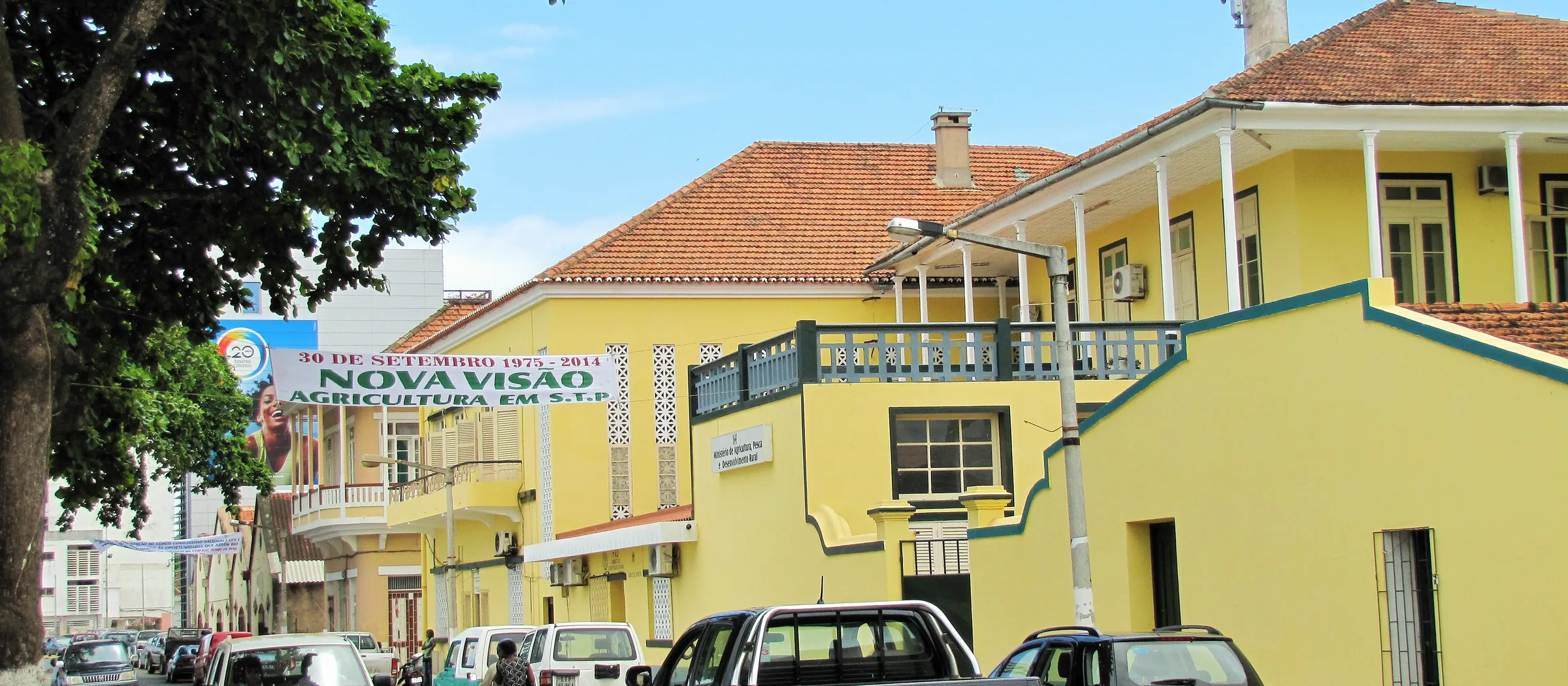
CPLP residence, citizenship in 7 years, apostille, inheritance of assets on the islands and recognition of judgments under the 1976 Judicial Agreement.
View country page →
CPLP member with open questions: entry into force of the Mobility Agreement and citizenship period analyzed case by case.
View country page →Legal basis and official sources
- Regulation (EU) No 650/2012 (Arts. 1, 12, 20, 21, 22, 30, 34, 39, 62, 63, 69 and 83; recitals 82 and 83)
- Decree-Law 4,657/1942 (Decreto-Lei) — LINDB, Brazil's Law of Introduction to the Rules of Brazilian Law (Art. 10)
- Law 13,105/2015 — Brazilian Code of Civil Procedure, CPC (Arts. 23, 961, 963, and 964)
- Complementary Law 227/2026 (Lei Complementar) (Arts. 158 and 159 — ITCMD with a foreign element)
- Portuguese Code of Civil Procedure — Law 41/2013 (Arts. 978 and 980)
- Stamp Duty Code — Law 150/99 (Art. 4)
- Resolution of the Assembly of the Republic 313/2021 — Agreement on Mobility among the CPLP Member States (DR 237/2021, PDF)
- Resolution of the Assembly of the Republic 313/2021 — page in the DR
- Law 23/2007 (Foreigners Act) — consolidated version, Arts. 52-A, 75 and 87-A
- Law 61/2025, of October 22 (Arts. 2 and 8) — PDF DR 204/2025
- AIMA — Frequently asked questions: grant of the CPLP residence permit
- Organic Law 1/2026, of May 18 (Arts. 2, 5, 7 and 8; Arts. 6 and 15 of Law 37/81) — PDF DR 95/2026
- Organic Law 1/2024, of March 5 (Art. 6(7) of Law 37/81; Arts. 6 and 9) — PDF DR 46/2024
- Decree-Law 26/2022, of March 18 (amendment to the Portuguese Nationality Regulation)
- IRS — Some nonresidents with U.S. assets must file estate tax returns (revised June 27, 2026)
- IRS — FAQ on estate taxes for nonresidents not citizens of the United States (revised September 20, 2026)
- IRS — Instructions for Form 706-NA (Rev. September 2025), PDF: US$60,000 filing threshold, US$13,000 unified credit, marital deduction/QDOT and list of death tax treaties
- IRS — Instructions for Form 706 (Rev. July 2026), PDF: Table A (18% to 40%) and basic exclusion amount of US$15,000,000 in 2026
- IRS — Estate & gift tax treaties (international) (revised September 8, 2026)
- Government of Israel (gov.il) — Request an inheritance order (The Guardian General and Director of Inheritance Affairs)
- Government of Israel (gov.il) — Petition for a probate order (The Guardian General and Director of Inheritance Affairs)
- Public Prosecutor's Office (GDDC) — record of the CPLP Mobility Agreement: deposit and entry into force by State (Notices 7 to 11/2022, 83/2022, 84/2022 and 93/2022)
- Decree 11,156, of July 29, 2022 — promulgates the CPLP Mobility Agreement in Brazil (deposit on March 7, 2022; in force for Brazil on April 1, 2022)
- Embassy of Portugal in São Tomé (MNE) — Note on the application of the CPLP Mobility Agreement (January 3, 2022)
- HCCH — Status table of the Apostille Convention of October 5, 1961 (last updated June 30, 2026)
- Portugal–Angola Agreement on Legal and Judicial Cooperation (Luanda, August 30, 1995; RAR 11/97; in force since May 5, 2006, Notice 582/2006) — Arts. 12 and 13
- Portugal–Mozambique Agreement on Legal and Judicial Cooperation (Lisbon, April 12, 1990; RAR 7/91; in force since February 22, 1996, Notice 71/96) — Arts. 13 and 14
- Portugal–Cape Verde Agreement on Legal and Judicial Cooperation (Praia, December 2, 2003; RAR 6/2005; in force since July 8, 2005, Notice 281/2005) — Arts. 25 to 27
- Portugal–Guinea-Bissau Agreement on Legal Cooperation (Bissau, July 5, 1988; RAR 11/89; in force since January 10, 1994, Notice 63/94) — Arts. 13 and 14
- Portugal–São Tomé and Príncipe Judicial Agreement (Lisbon, March 23, 1976; Decree 550-M/76) — Arts. 8 and 31
- Portugal–Israel Convention for the avoidance of double taxation with respect to taxes on income (RAR 2/2008; in force since February 18, 2008)
- Decree 5,576/2005 — Brazil–Israel Convention for the avoidance of double taxation with respect to taxes on income (Art. 2: taxes covered)
- Fundamental Law of Equatorial Guinea (text promulgated on February 16, 2012), Art. 4 — publication of the government's Information and Press Office


Common questions
Didn't find your question? Talk to our team on WhatsApp.
I have assets in Brazil, Portugal and the United States. How many proceedings will be needed?
As a rule, one in each country: inventory proceedings in Brazil (Art. 23, II, of the CPC), declaration of heirs and partition in Portugal, and probate or another transfer mechanism in the U.S., according to the law of the state where the assets are located. Estate planning during one's lifetime seeks to reduce friction between these proceedings, with coordinated wills and consistent documents.
Does a Brazilian living in Portugal pay estate tax on U.S. shares?
They may. Shares of corporations organized in the U.S. are considered U.S.-situs assets, even if held with a broker or as certificates abroad. If the total U.S.-situs assets exceed US$60,000, the executor must file Form 706-NA, and the unified credit is generally US$13,000, which corresponds to the tax on the first US$60,000 (IRS). The actual calculation must be made by a lawyer or accountant licensed in the U.S., hired by the client.
Is there a treaty between the U.S. and Brazil or Portugal to avoid double taxation of inheritances?
No. The IRS's official list of estate and gift tax treaties includes 15 countries (among them Germany, France, Italy, the United Kingdom and Japan), which do not include Brazil or Portugal (IRS). Therefore, the tax analysis must be made asset by asset, considering the Brazilian ITCMD and, for assets in Portugal, Stamp Duty.
I am Angolan and live in Portugal. Can I apply for the CPLP residence permit?
Since Law 61/2025, the CPLP residence permit can only be applied for in Portugal by those who hold a residence visa (Art. 87-A of Law 23/2007), obtained at Portuguese consular posts. Those in Portugal with another permit, or without any permit, need an individual analysis of the available routes.
How long does a Cape Verdean need to reside in Portugal to apply for citizenship?
Seven years of legal residence, added up within a maximum window of nine years, for nationals of countries where Portuguese is an official language (Organic Law 1/2026; Arts. 6(1)(b) and 15(3) of the Nationality Act). Knowledge of the language is presumed, unless there is a manifest lack of proficiency (Art. 6(10)). The other requirements still apply.
Is it still possible to apply for Portuguese citizenship as a descendant of Sephardic Jews?
Not for new applications. Organic Law 1/2026 repealed Art. 6(7) of the Nationality Act, with effect from May 19, 2026. Proceedings already pending on that date remain governed by the previous law (Art. 7(2)).
Is a partition judgment issued in Mozambique valid in Brazil and Portugal?
Not automatically. In Brazil, it depends on recognition by the STJ and is not possible with respect to assets located in Brazil (Arts. 961 and 964 of the CPC). In Portugal, it depends on review and confirmation by the competent Court of Appeal (Tribunal da Relação) (Arts. 978 and 980 of the Portuguese CPC). The Agreement on Legal and Judicial Cooperation between Portugal and Mozambique keeps this requirement (Art. 13), with a waiver only in specific cases, such as the use of the decision merely as evidence. See our page on recognition of foreign judgments.
Can the firm represent the family before U.S., Angolan or Israeli courts?
No. The firm practices Brazilian law, with lawyers admitted to the OAB, and Portuguese law, with Dr. Natalie Sene admitted to the Portuguese Bar Association (Ordem dos Advogados) (license 59783L). In other countries, proceedings must be conducted by a lawyer licensed in that country, hired by the client. On our side, we handle the effects in Brazil and Portugal (applicable law, inventory proceedings, declaration of heirs and partition, recognition of judgments and documents) and, at the client's request, coordinate with that lawyer, so that the decisions made in each country are consistent with the planning in Brazil and Portugal.
Latest articles

Selling property in Brazil while living in Portugal
Power of attorney or videoconference, capital gains tax of 15% to 22.5% without the exemptions available to residents, withholding by the buyer, remittance, and credit for the tax against Portuguese IRS: what changes for those living in Portugal.

I inherited property in Brazil and live in Portugal: step by step
Out-of-court inventory before a notary without traveling, a power of attorney with special powers, documents, ITCMD, and the choice of the property's value in the partition: a step-by-step guide for those who inherited in Brazil and live in Portugal.

INSS retirees in Portugal: income tax at progressive rates in 2026
Since Normative Instruction IN RFB 2,299/2025, pensions paid to people living in Portugal are taxed under the progressive table. See the calculation for 2026, the effect on Portuguese IRS, and how to claim back the 25% withheld in recent years.